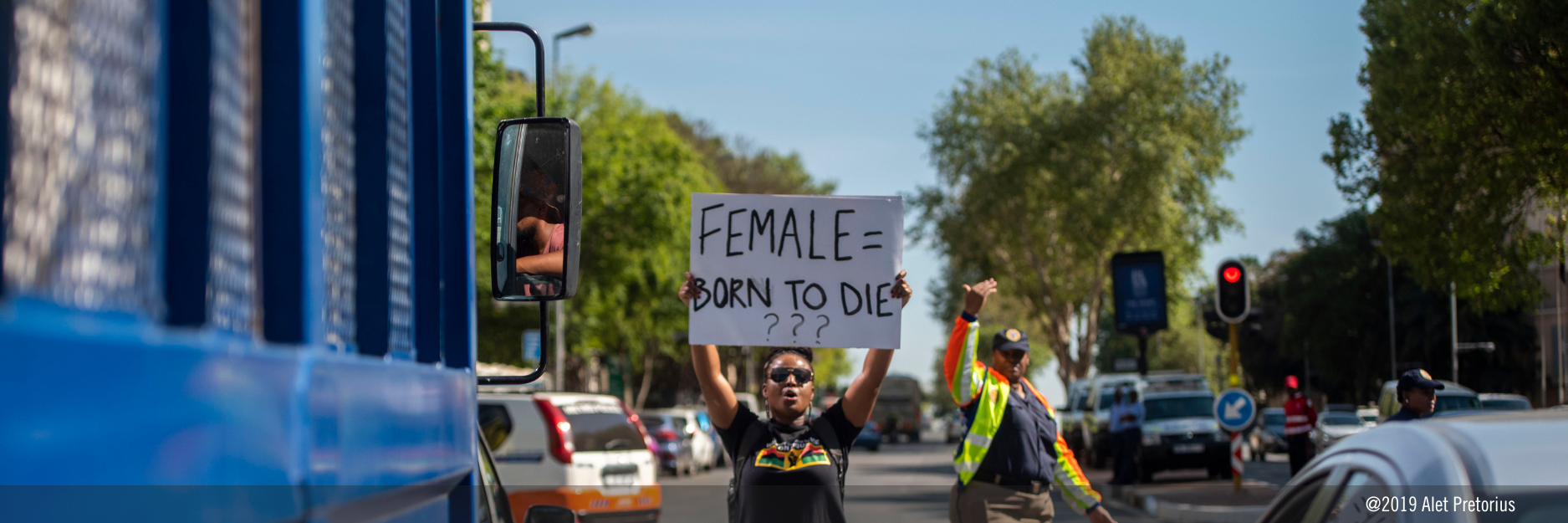
As South Africa gears up to commemorate Women’s Day, women in this country continue to live at risk of violence. Despite many commitments from the government to deal with gender-based violence and femicide, we continue to see high rates of reported cases of sexual violence and murder of women. Amnesty International South Africa’s Executive Director Shenilla Mohamed said:
“We continue to hear reports on a daily basis of women and girls being killed, abused, and violated with very little justice and accountability. We hear of women who have tried to report their cases to the South African Police Service (SAPS), only for them to be turned away, or of cases of rape and murder not being properly investigated. We hear of ineffective protection orders that simply go ignored. This leaves us with many questions – what is being done to ensure the protection of women? What is the SAPS doing to improve the treatment of survivors? Is there enough victim-centric training being done to ensure all officials in the criminal justice system are receiving appropriate training to assist survivors of violence? Reporting on numbers alone is not enough – what impact is the training having to improve the support survivors get when reporting?”
The SAPS face numerous challenges, including corruption, inadequate training, and insufficient resources, resulting in poor investigations and a lack of public trust. To tackle these systemic issues, it is crucial to enhance recruitment and training processes, ensure sufficient resources are allocated to the SAPS, implement stricter internal controls, and foster a culture of integrity within the police force.
Improving the quality and efficiency of investigations is crucial for ensuring successful prosecutions. Providing sufficient resources, investing in training programs for investigators, enhancing forensic capacities, and strengthening specialised units which tackle specific crimes (such as GBV) can lead to more effective investigations. Collaboration between the police, prosecution services, and other relevant agencies is essential to streamline information sharing and ensure seamless coordination. Respecting human rights and promoting professionalism within the police service are paramount. Training programmes should emphasise human rights principles, cultural sensitivity, and unbiased policing.
“It is clear that there needs to be a strengthening of the criminal justice system, so that it is fit for purpose to deal with the country’s high levels of rape and murder. We continue to speak about this, but yet we continue to see declining detection and low conviction rates,” Shenilla Mohamed said.
“We continue to call for continuous victim-centric training of all officials in the criminal justice system that is measured qualitatively rather than just on the number of trainings delivered. Victims and survivors of GBV must be treated with dignity and care, and their cases must be dealt with professionalism, sensitivity and appropriate urgency.”
On 23 May 2025, the fourth quarter crime statistics were released for the 2024/2025 financial year. Disaggregated crime statistics related to the murder, attempted murder, and assault of women and children was notably left out of the reporting, without explanation. Accurately reporting these statistics is key to ensuring that the criminal justice system, including SAPS, are able to develop effective, data-driven interventions to protect the women and children behind the numbers and to secure justice.
“It is unacceptable in the context of South Africa’s high levels of gender-based violence, that important disaggregated information on the violations against women and children are left out of reporting. There must be a correction of the report and SAPS must immediately work to ensure that these crimes against women and children are accurately recorded and transparently reported on in all upcoming crime statistics.”
We need more transparency from SAPS, the National Prosecuting Authority, the Department of Justice, and all government officials in the criminal justice system. Transparency is one step towards ensuring an increase in trust in the police and the overall criminal justice system again, which is declining.
“The proper functioning of the criminal justice system is essential to ensuring justice and accountability for cases of GBV. We reiterate our calls for the Commission of Inquiry into allegations made by KwaZulu-Natal Police Commissioner General Mkhwanazi to be addressed with the severity and urgency required. Anything less is a blatant disregard for ensuring the protection of everyone’s rights to safety and life in South Africa.”
Background
On 9 August 1956, approximately 20,000 women marched to the Union Buildings in Pretoria to protest against apartheid “pass laws” which restricted the movement of black people under the Population Registration Act. The Act required them to carry passports, known as a pass, to move within the country, and served to entrench and maintain racial segregation.
In 2023/2024, the SAPS annual crime statistics report captured 53,285 reports of sexual offences.
FOR MORE INFORMATION OR TO REQUEST AN INTERVIEW, PLEASE CONTACT:
Alicia Jooste, Senior Programme Officer, Amnesty International South Africa on +27 (0)64 890 9224 or alicia.jooste@amnesty.org.za