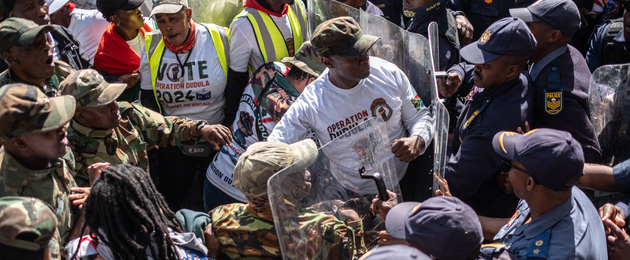
Stronger political leadership is urgently needed to address xenophobia, its root causes, and uphold the rights of everyone, as a private anti-migrant group continues with its unlawful 30 June deadline for undocumented migrants to leave the country, Amnesty International South Africa said today.
South Africa must avoid a repetition of the devastating 2008 xenophobic violence when 62 people were killed, 21 South Africans and 41 migrants. There has been a recent surge of xenophobic violence in the country with anti-migrant groups March and March setting a “deadline” of 30 June for all undocumented migrants to leave South Africa. The group has said there will be marches in at least seven of the nine provinces on Tuesday.
“Amnesty International supports the right to peaceful protest. But violence, intimidation, harassment and self-appointed ‘enforcement’ of immigration laws is unlawful and has no place in our society. History has shown us where this path leads and how quickly things can turn deadly,” Amnesty International South Africa Executive Director Shenilla Mohamed said.
March and March has been encouraging people in South Africa to make a “citizens’ arrest” in terms of the Criminal Procedure Act when encountering undocumented migrants.
South African law is clear, private individuals have no authority to demand documentation from anyone or arrest people suspected of being undocumented. Citizen’s arrests under Section 42 of the Criminal Procedure Act are allowed only in strictly limited cases, mainly to stop serious schedule one crimes such as murder, rape or sexual assault. The Immigration Act reserves arrest powers for authorised immigration officers alone. Police may conduct searches without a warrant under Section 13(6) of the South African Police Service Act, but this power does not extend to private persons.
“Anyone taking the law into their own hands is breaking it. Impunity for xenophobic crimes have contributed to the continued discriminatory rhetoric and violence. The violation of people’s rights to safety, security, dignity and life must not be allowed to continue,” Shenilla Mohamed said.
Despite its strong legal and human rights framework on refugees and asylum seekers’ rights, South Africa’s asylum management system is failing, leaving hundreds of thousands of applicants without proper documentation and exacerbating xenophobia in the country. The consequences of this broken system, together with persistent inequalities and socioeconomic exclusion rooted in the legacies of apartheid, go far beyond bureaucracy, feeding public frustration and creating fertile ground for misinformation and scapegoating.
“In persisting with a broken system that leaves those trying to claim asylum undocumented and in limbo, some for up to 19 years, the government is causing a divide and inflaming tensions between South African citizens and fellow Africans living in the country. This points to the urgent need for broader systemic reform to ensure that all those who appear to be living in the country undocumented are processed in a timely manner and in line with the law,” Shenilla Mohamed said.
“Scapegoating asylum seekers, refugees and migrants for South Africa’s deep challenges of unemployment, inequality and failing services that are rooted in the legacies of apartheid is wrong and dangerous. It distracts from the state’s responsibility to deliver for all who live in South Africa and address the root causes. Violence and vigilantism will never fix these problems, they only destroy lives and deepen division.”
The government must lead with clear action, investigate all attacks impartially, hold perpetrators accountable, combat misinformation, and fix the broken asylum system that leaves hundreds of thousands marginalised and without access to protection or rights.
For more information or to request an interview, please contact:
Genevieve Quintal, Media and Communications Officer, Amnesty International South Africa: +27 (0)64 890 9224; genevieve.quintal@amnesty.org.za