Walls once used to imprison anti-apartheid activists now hold something far brighter, the Constitutional Court of South Africa. On a recent afternoon at Constitution Hill in Johannesburg, where the court is located, Dr Julia Duchrow, Secretary General of Amnesty International Germany, walked through the precinct watching sunlight filter through the glass and steel architecture of what used to oppress now a become a symbol of protection.
“This place, it stands like a lighthouse”, she said.
“It reminds us that law should control power, not the other way around.”
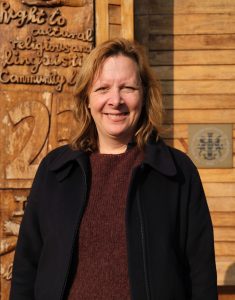
Julia Duchrow, Amnesty International Germany Secretary General
Duchrow’s connection to South Africa predates many visitors by decades. She first arrived in 1990, shortly after Nelson Mandela’s release, amid apartheid’s final years. Working with the Black Sash advice office, a community support organisation, she witnessed systemic brutality firsthand. Returning decades later, she described standing at Constitution Hill as profoundly moving. A powerful testament to what people-powered change can achieve.
“Overturning such a repressive government gives me a lot of hope for human rights struggles in general.
she said.
As one of the largest national Sections in the global Amnesty movement, boasting over 180,000 supporters and hundreds of local activist groups, Amnesty International Germany operates with resources and reach. But size alone does not guarantee impact. Under Duchrow’s leadership since November 2023, the organisation concentrates its energy on three targeted campaigns where pressure matters most.
The Three Fronts
First, Israel and the Occupied Palestinian Territory (OPT). The Section calls for an immediate halt to German arms exports to Israel and urges the European Union to suspend the EU-Israel Association Agreement. This campaign confronts serious violations of international humanitarian law, from Gaza’s devastation to occupation in the West Bank, while exposing erosion of legal norms and the dual repression faced by civilians and activists alike. Given Germany’s close political and military ties with Israel, Duchrow notes this represents civil society’s particular responsibility to engage.
Second, Amnesty International’s flagship campaign Protect the Protest. Across Europe and within Germany itself, fundamental rights to free expression, peaceful assembly, and dissent face mounting pressure. Amnesty Germany has defended climate activists harshly policed or labeled terrorist threats, plus pro-Palestinian demonstrators confronting disproportionate restrictions. The pushback targets shrinking civic space and governments weaponising security rhetoric to silence opposition.
Third, countering anti-rights narratives. Racism, discrimination, and attacks on human rights defenders, particularly those advocating for LGBTI communities and migrants, are rising globally. Through festival appearances, public education campaigns, and direct partnerships with affected communities, the Section challenges toxic narratives in public discourse. A central focus involves Germany and the EU’s asylum policies, criticised for border externalisation, legalised pushbacks, and cooperation with countries like Libya where refugees face genuine harm.
“We must be an anti-racist movement that listens to and stands with those directly impacted,” Duchrow emphasised.
“Challenges persist – mobilising members effectively, navigating political resistance especially around Israel/OPT issues where Germany’s alliances complicate advocacy- but shifting media and public narratives suggest progress remains possible”, she said.
Where It Begins
Amnesty International’s uniqueness lies in its global nature. National entities align with international strategic frameworks rather than operating in isolation. Staff exchanges occur between entities; lessons flow from regions facing authoritarianism to others developing their own movements. Duchrow maintains connections with leaders like Amnesty International South Africa’s Executive Director Shenilla Mohamed, valuing cross-border solidarity as much as policy coordination.
Her own trajectory mirrors this philosophy. Born in Geneva in 1971, where her father worked for the Lutheran World Federation, family engagement with social justice shaped her early consciousness. Her parents’ activism in the German church movement against apartheid politicised her childhood. At 19, she traveled to South Africa and began working with displaced communities through the Black Sash advice office. That experience proved transformative.
“It left a lasting impression,” she recalled.
“It inspired me to study law, specialising in international law and asylum, then pursue a PhD on minority rights in multicultural societies, using South Africa as a key case study.”
Professionally, 10 years as an asylum policy officer at Amnesty International Germany preceded eight years leading human rights and peace departments at Brot für die Welt, German for Bread for the World, which is a global development and relief agency of the Protestant Churches in Germany. When she returned to Amnesty Germany in 2019 as Deputy Secretary General, the path toward Secretary General seemed inevitable, though never guaranteed.
Despite demanding responsibilities governing a large national section, Duchrow speaks with quiet conviction about her source of motivation. Backlash arrives consistently. Political change moves slowly but gradually. The emotional weight of documenting human rights violations accumulates quietly.
“What keeps me going is people,” she said.
“Successes, from freeing prisoners through international pressure to visible shifts like massive protests in Hungary, remind me that persistence pays off. People power, even starting small before growing, drives real change.”
She frames her work as a calling rooted in passion and faith in the rule-based international order, even as transformations to address colonial legacies embedded within it are needed. For young advocates, interns, and activists seeking guidance, her counsel stays consistent – pursue what you are passionate about, stay critical yet committed to human rights principles, and never surrender.
Duchrow also speaks about wider patterns emerging across continents. Iranian women and men continue to struggle despite violent repression. Waves of international solidarity surging upward despite calculated crackdowns. These moments matter because they reveal possibility.
“People power remains the greatest source of hope. Another world is possible when we stand together.
From prison walls transformed into courtrooms to ongoing battles spanning generations and geographies, human rights movements survive on exactly this principle, solidarity crossing borders without permission. Under Duchrow’s leadership, Amnesty International Germany continues highlighting human rights abuses while empowering ordinary citizens to demand accountability. In times of rising authoritarian practices, that mission carries renewed urgency, and perhaps renewed chance for success.