People are reporting [the leaks]… and the municipality does nothing about it. And no one’s taking accountability, no one’s taking responsibility. They just switch water on and off as they please and people must just deal with that and carry on.”
Phumelela Cacela – a young activist from Kwazakhele
The lack of accountability continues to be a massive issue in South Africa. This is seen at all levels, from local government all the way to the top at national government. From corporations and how they operate, to vigilante groups which we see taking the law into their own hands.
The common thread is that there is no accountability for their actions or lack of action which has deep impacts on people’s lives, livelihoods, and human rights.
South Africa has one of the best Constitutions in the world which underpins our legal framework, but what is the point of this if the institutions who serve it do not take it seriously?
Since the beginning of this year, my team and I have made sure that we speak about accountability in everything that we do. People across the country have been calling for accountability and an end to impunity. Accountability is at the top of everyone’s minds, and it is quite clear that people in power – at all levels of society – need to take the issue more seriously.
In the last quarter we have seen what happens when the government and corporations are not held accountable, it is the people who suffer, and it is usually the poor that bear the brunt of this. This is why the concept of “people power” is so important.
Around the world mass movements, civil society and front-line responders have been rising to combat some of the world’s biggest challenges – from the climate crisis to poor governance, corruption, and a shrinking civil space. But are our tactics leading to systemic and sustainable change? It’s time to step into a new era of people power, where people’s voices are heard and where they are empowered to step up and fight for their rights.
This quarter we started work on climate justice with a focus on the right to water.
The right to access safe, sufficient, and reliable water will continue to be threatened unless the government prioritises investment in infrastructure, implements climate friendly policies, and tackles corruption and the mismanagement of public funds. Water scarcity continues to be exacerbated by a lack of investment in infrastructure or technology, called economic water scarcity, and the climate crisis, yet the government is doing very little to mitigate the consequences this will have for everyone living in the country. Again, there is little to no accountability by the state.
Part of our water campaign is to contribute to increasing climate literacy amongst young people in South Africa, so that they can use their power to hold the state accountable when it comes to issues of climate change and water.
As AISA, we have continued to keep a close eye on the “second pandemic” of gender-based violence and femicide. Another area where there has been little accountability for the lack of justice for victims. We have seen some horrendous cases of GBV, most notably the gang rape of eight women in Krugersdorp. This incident brought attention to the broken promises made by the state over decades, as AISA has highlighted in our #BrokenPromises campaign. AISA had its voice heard on this issue and our #BrokenPromises campaign was featured in a Sunday Times article.
This quarter we also started speaking about the crisis of early pregnancy in South Africa. You can read more about that in this edition of Lesedi. The frightening numbers will make your hair stand on end.
While we continue to fight for accountability there is a worrying trend of shrinking civic space here in South Africa and worldwide. Throughout this year, we have seen politicians openly attempting to smear civil society organisations, making the important work we do difficult. You will see in this edition of the Lesedi that AISA, along with 21 other civil society organisations, have written to President Cyril Ramaphosa calling for accountability, once again.
We also made submission’s the education department on the proposed changes to the Minimum Norms and Standards, which are regulations that define the infrastructural conditions for a school. We believe the department is trying to get out of being held accountable for the lack of infrastructure, such as the eradication of pit toilets, and we refuse to let this happen.
All of these, and much more, are examples of how we continue to play our part to hold those in power to account. We need to empower those who are most affected to also take up the fight and ensure that those responsible are held accountable. We cannot let our guard down, not even for a second.
Aluta Continua!
Shenilla Mohamed
THE CRISIS OF EARLY PREGNANCY IN SOUTH AFRICA #TheRealMaternityIssue
By Genevieve Quintal, Amnesty International South Africa Media & Comms Officer
Amnesty International South Africa in partnership with Joe Public United and True Love shone a light on the crisis that is early pregnancy during Women’s Month.
In partnership with True Love and their August edition, aptly referred to as #TheRealMaternityIssue, the campaign aimed to ensure the message reached everyone living in South Africa.
Early pregnancy is a social, health and economic issue affecting children in South Africa.
There has been a significant increase in the number of adolescent and young girls falling pregnant – ultimately girls who are giving birth from as young as 10 years old. This is a major cause for concern.
In South Africa, between April 2017 and September 2021, the number of births to young and adolescent girls between 10 and 14 years of age increased by 48.7%. Between April 2020 and March 2021, 934 girls between 10 and 14 years old gave birth in Gauteng alone.
It is also important to note that these are the number of births, not the number of pregnancies – bearing in mind some pregnancies ended in abortions and miscarriages.
While this is a societal issue that needs to be tackled by the government and the people together, the state also has a responsibility to create an enabling environment for people to make autonomous and informed decisions.
Early pregnancy has a ripple effect in terms of the adverse impact that comes with it. Often these pregnancies result in these girls being forced to drop out of school or fall behind with their schoolwork. This also results in a cycle of poverty with some becoming dependent on public assistance. They also facestigma, and are sometimes forced to marry early.
Other factors such as gender inequality, gender-based violence, substance abuse, poor access to contraceptives (as well as limited education about the options available), barriers to accessing termination of pregnancy, as well as many healthcare system challenges, exacerbate the problem.
A reality check can be seen in the statistics. In 2020, 2,665 girls aged 10-14 and 91,580 between 15-19 years of age gave birth, according to Statistics SA. In a written response to questions in Parliament, Basic Education Minister Angie Motshekga in June this year said 90,037 girls aged 10-19 gave birth between April 2021 and March 2022.
Gender-based violence is also a contributing factor to early pregnancies, as up to one in three children under the age of 18 experienced sexual abuse.
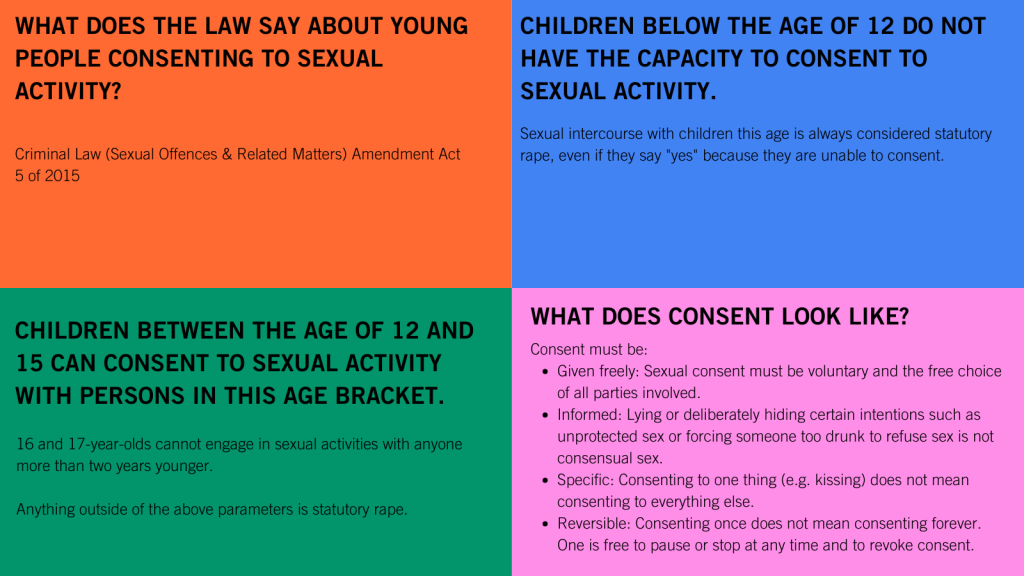
South African law clearly states that, children below the age of 12 do not have the capacity to consent to sexual activity. Sexual intercourse with a child below the age of 12 is always considered rape. Even if the child says “yes”, they are unable to give consent at that age. Consensual sexual intercourse may occur between two children who are at least 12 years old and under the age of 16. 16- to 17-year-olds may only have consensual sex with persons no more than two years younger than them. This means that even though a child between the ages of 12 and 15 can consent, if there is more than a two year age difference, and one is 16 or over, the latter will be guilty of statutory rape.
Gender-based violence must be tackled as one of the root causes of early pregnancy.
In an event where the pregnancy occurs as a result of rape and statutory rape, cases must be reported to the South African Police Service (SAPS). The criminal justice system, including the SAPS and the National Prosecuting Authority, must respond in a timeous, efficient and effective manner to these cases.
Amnesty International South Africa has been calling on President Cyril Ramaphosa and his government to play its part in combating the crisis of early pregnancy.
Almost 2000 people have joined us in calling on the President to ensure the government works together to address the high levels of early pregnancy in South Africa. They ensured that we flooded President Ramaphosa’s inbox with emails calling for action.
We encourage everyone to help us play a pivotal role in raising awareness about the issue and to take action – calling on the government to ensure that there is real change so our young girls are protected and capacitated with information to make informed decisions about their bodies.
We hope that the message will reach the people who have the power to influence our laws and policies to protect adolescent and young girls.
ADD YOUR VOICE: SEND AN EMAIL TO THE PRESIDENT
Call on President Cyril Ramaphosa to ensure government work together to address the high levels of early pregnancy in South Africa. It is a social, health and economic issue affecting our most precious resource: our children.
We asked influencial people in the country to take a photo with the True Love front cover and share it on their social media platforms with the hashtag #RealMaternityIssue, tagging both @amnestysafrica and @truelovemagazine so that we can get the word out.
Check out some of those posts.
By Alicia Jooste, Amnesty International South Africa Activism Coordinator: Mobilising
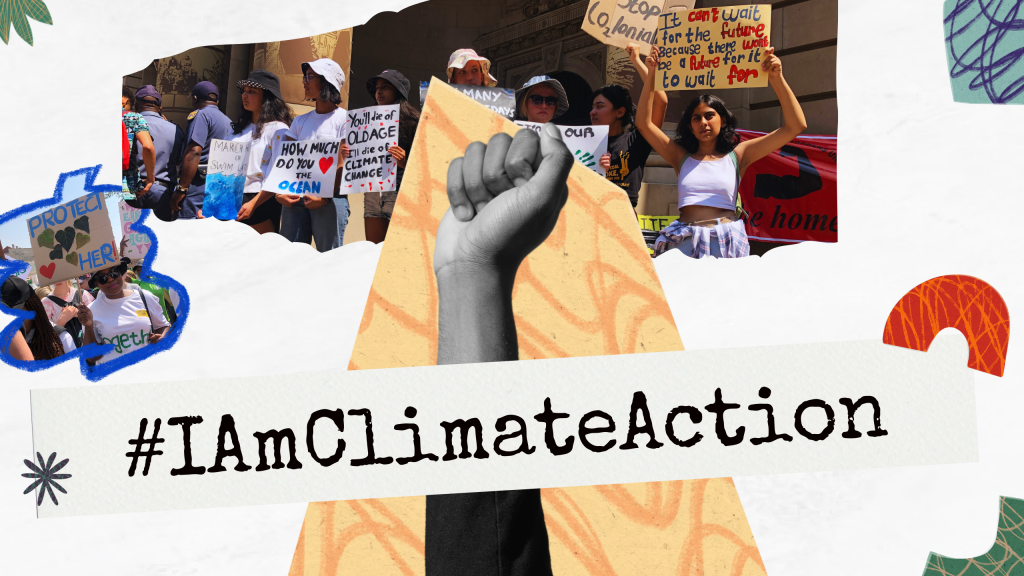
In July this year, Amnesty International South Africa launched a climate change course and campaign, #IAmClimateAction that aims to contribute to increasing climate literacy amongst young people in South Africa.
As the climate crisis intensifies there is an urgent need to increase climate literacy in South Africa. Climate change is affecting and will continue to affect bread-and-butter issues like access to safe, sufficient and reliable water, food, adequate housing and health. We witnessed this during the recent KwaZulu-Natal floods and the drought that Nelson Mandela Bay is currently facing. As climate scientists have predicted we are only going to see an increase in extreme weather events because of climate change.
In the lead up to COP27 in Egypt, AISA will work partners to raise awareness and build pressure to ensure we are leveraging this pivotal moment for concrete commitments and action from the South African government. Watch this space.
It’s time we equip ourselves with the knowledge on how to collectively fight the climate crisis to protect ourselves and future generations from its devastating impacts. You can register for the free course here and join the close to 2000 people already committed to learning more about how the climate crisis is affecting access to basic human rights in South Africa.
AMNESTY INTERNATIONAL SOUTH AFRICA LAUNCHED ITS CLIMATE CHANGE CAMPAIGN, #IAMCLIMATEACTION ON 5 JULY 2022, WHICH AIMS TO INCREASE CLIMATE LITERACY AMONG YOUNG PEOPLE TO ENSURE EVERY PERSON IN SOUTH AFRICA HAS THE KNOWLEDGE TO HOLD THE RELEVANT GOVERNMENT PLAYERS ACCOUNTABLE TO THEIR COMMITMENTS TO UPHOLD THE RIGHT TO WATER IN THE FACE OF THE CLIMATE CRISIS.
LEARN MORE ABOUT AMNESTY INTERNATIONAL SOUTH AFRICA’S FREE CLIMATE CHANGE COURSE ON OUR LEARNING PORTAL.
TOOLKIT: CLIMATE CHANGE AND THE RIGHT TO WATER
This toolkit has been designed to provide valuable resources and accurate information to those looking to understand their right to water in the face of the climate crisis, and how to hold government officials accountable. Knowledge of your rights and the steps to take in promoting accountability is key to ensuring that your actions are effective, safe and legal.
NELSON MANDELA BAY
Nelson Mandela Bay is facing prolonged drought caused by a decrease in rainfall in the area. This is leading to shortages of water supply and an imminent day zero, in which the municipality is reporting that 107 areas are expected to be, and some already are, affected.
Day zero means that water sources in the area will be depleted and will no longer be able to supply water to residents. Residents will largely have to collect water from central locations.
Ultimately taps will run dry.
Yet, in the lead up to day zero and while facing drought, Nelson Mandela Bay was losing 29% of its water to leaks. This act of municipal mismanagement has largely fast-tracked day zero and threatened access to safe, sufficient and reliable water for thousands of residents.
As of Monday, 6 June, the Department of Water and Sanitation (DWS) intervened through Section 63 of the Water Services Act, 108, 1997 and appointed the Amatola Water Board as the implementing agent. This means the department will take leadership of water and sanitation projects to resolve the water challenges that are taking place in the metro.
Although progress has been made in fixing leaks, considerable damage has already been done, including threatening access to safe, sufficient and reliable water for thousands of residents.
Make your voice heard.
Send a direct email to the Minister of Water and Sanitation, Senzo Mchunu, calling for greater transparency about plans to mitigate the harmful impacts of the current drought and to increase efforts to ensure every resident in NMB has access to information about the impact the drought and day zero will have on the right to safe, sufficient and reliable water.
By Cassandra Dorasamy, Amnesty International South Africa Research Consultant
On 4 August 2022, AISA penned an open letter to President Cyril Ramaphosa about ongoing attacks against civil society. Throughout this year, we have seen politicians openly attempting to smear civil society organisations, making the important work we do difficult.
After staff at the Socio-Economic Rights Institute announced that they were temporarily closing their office following a tweet from a municipal official attacking the organisation – resulting in violent threats against their staff – we felt that it was time to take the matter to the President. AISA and 21 other organisations called on the President to get serious about holding government officials accountable for their comments.
The room for civic action is shrinking and the urgent need for intervention has only become more apparent in the recent months. Just 16 days after we published our letter, 28-year old Linkdokuhle Mnguni was assassinated. He was the chairperson of the Cato Manor branch of Abahlali baseMjondolo, a shack-dwellers’ movement fighting for land, housing, dignity, and other basic rights. Mnguni was described as a brilliant young man and a fearless leader.
On the media front, specialist legal journalist Karyn Maughan was served with summons by former president Jacob Zuma in what has been described as an attempt to intimidate and silence her reporting. Maughan is challenging this summons.
Holding those in power accountable can often put individuals, communities, and organisations in danger. We continue to stand in solidarity with all those who are targeted for exercising their rights and we urge President Ramaphosa to protect our civic space.
CIVIL SOCIETY ORGANISATIONS OPEN LETTER TO PRESIDENT CYRIL RAMAPHOSA ABOUT ONGOING ATTACKS AGAINST THE SECTOR
Amnesty International South Africa and 21 other civil society organisations raised concern about shrinking civic space and called on President Ramaphosa to hold officials who threaten organisations to account.
READ THE FULL LETTER HERE
Civil society plays an important role in the country’s accountability mechanism, and if you, Mr President, are serious about accountability, you will not allow these organisations to be scapegoated and made to live in fear because of the failings of your government.
22 civil society organisations
Marikana: The battle for justice, accountability, and better living conditions
By Sibusiso Khasa, Campaigner at Amnesty International South Africa
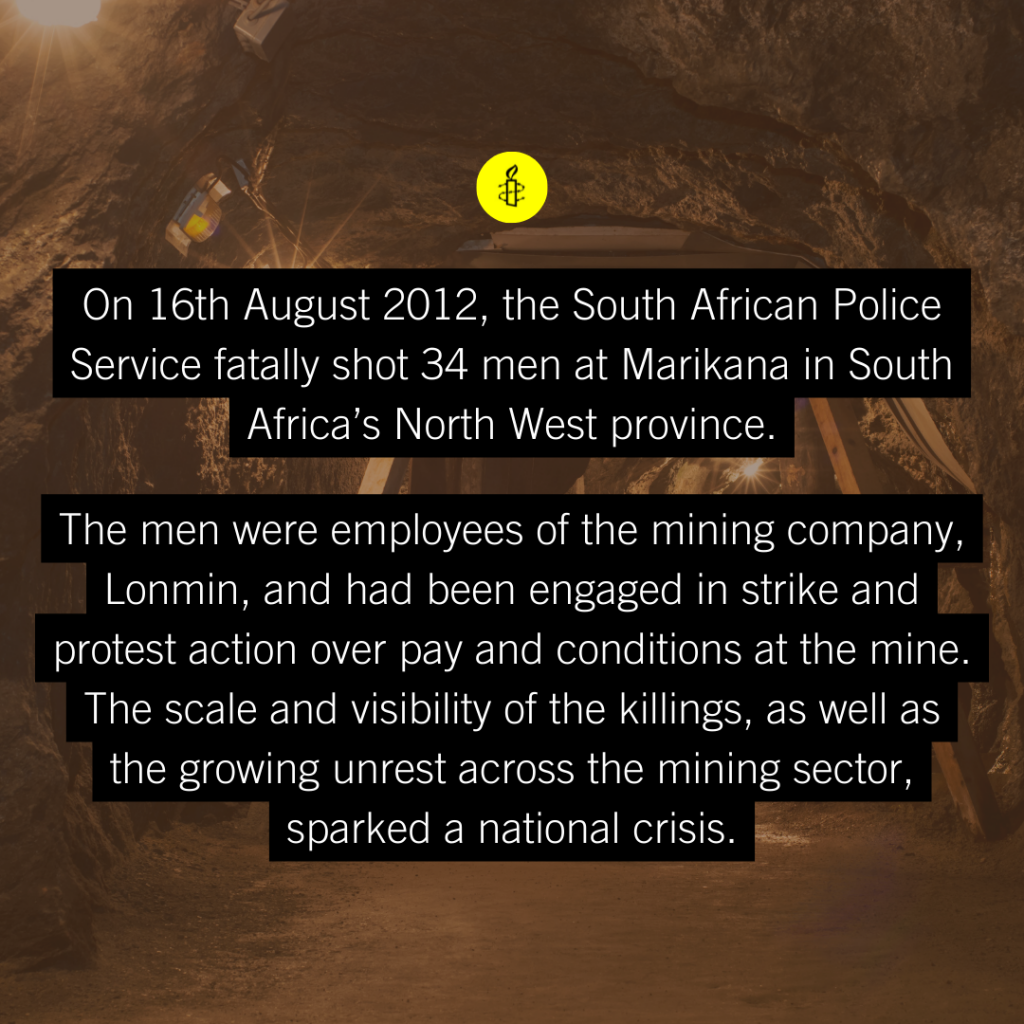
‘We’ll fight another 10 years to taste justice’ read one of the headlines as South Africa marked the 10th Anniversary of the Marikana massacre in August. Not a single South African Police Service member has been prosecuted for the killing of 34 Lonmin mine workers in Marikana on 16 August 2012. Even the families of the 10 people, including two security guards and two police officers, who were killed days before the massacre are still seeking justice and accountability.
One of the widows, Nosihle Ngoyi told the media that they “want all those implicated in the murders to be prosecuted. We want to see them going to jail”.
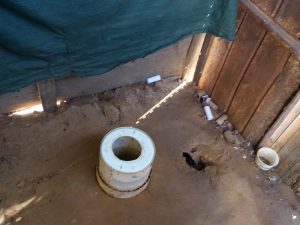
Justice is not the only thing that the families of the victims, including those who were injured, are crying for. They also seek basic services like water and sanitation and adequate housing. The same goes for communities that are in the vicinity of the mine, which since 2019 has been taken over by Sibanye-Stillwater. Marikana may be rich in platinum, but the profits from mining do not benefit residents, some of them are still using pit toilets.
Their pain is made worse by the broken promises made by both the mine and government.
In 2015, the judicial commission of inquiry, known as the Farlam Commission, which investigated the tragic events of August 2012, found that Lonmin had failed to adhere to the terms of its legally binding Social Labour Plan (SLP) with regard to housing, and that the company had “created an environment conducive to the creation of tension and labour unrest” by not addressing the housing situation at Marikana.
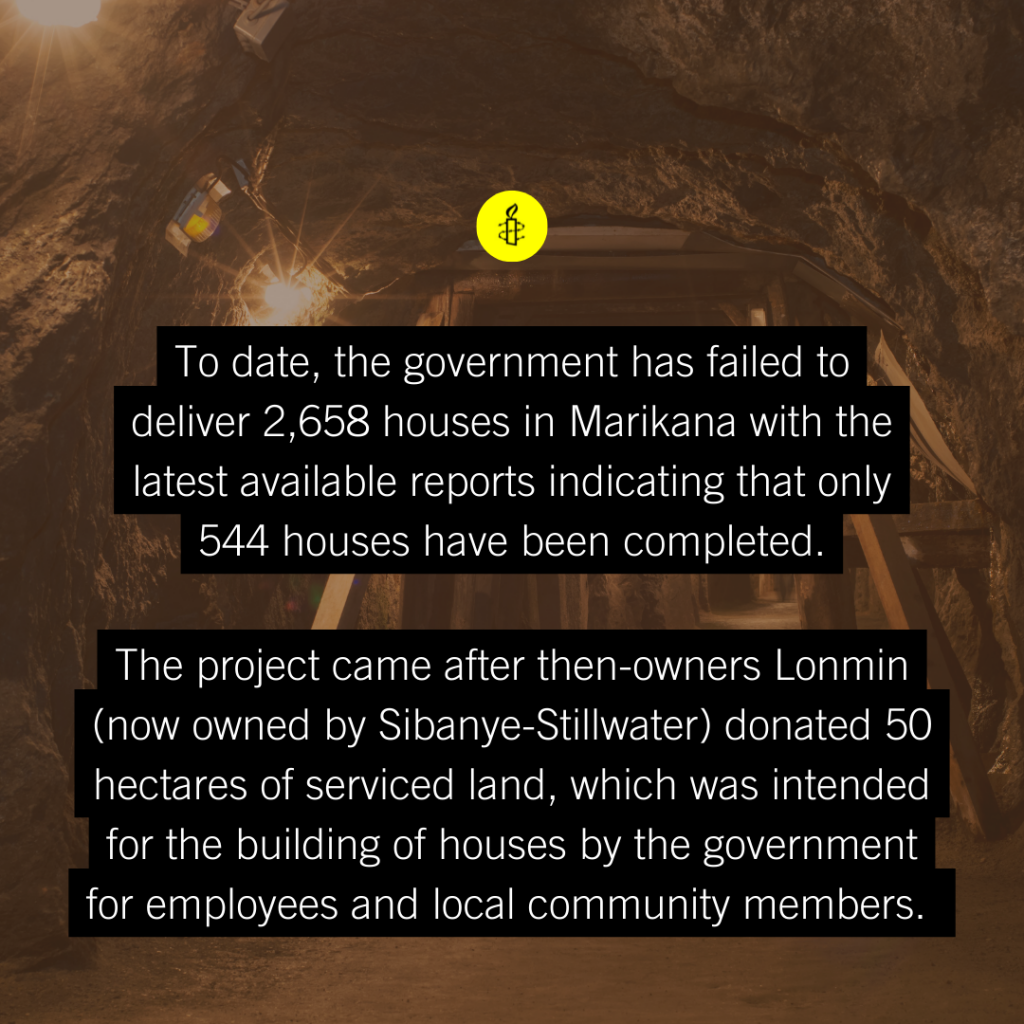
Latest available reports indicate that only 544 houses of the 2,658 units, that the government promised, have been completed since the Marikana Extension 2 Integrated Development Project began in the 2014/15 financial year. According to the government, the houses were supposed to be delivered over a period of three years. The project came after then-owners Lonmin donated 50 hectares of serviced land, which was intended for the building of accommodation units by the government for employees and local community members.
In 2016, it was reported that Human Settlements Minister Lindiwe Sisulu, handed over 200 houses to the community as part of this project. Sisulu was cited in the government’s communication saying: “We are happy to be here to hand over houses to the miners but also to the community of Marikana as a whole. We promised to help all 22 mining towns in distress and today we are here to start that journey”.
However, the government this year told the public that the Department of Human Settlements had built “511 housing units in Marikana, which were regrettably illegally occupied before they could be handed over to the qualifying beneficiaries”. This lack of clear and reliable communication from the government further highlights its poor handling of issues facing the community of Marikana.
The failure to build the over 2000 houses is not the only broken promise. In its 2006 SLP, Lonmin committed to building 5,500 houses for their migrant employees but only built three. The company claimed that it did not find any financial partners and workers did not want to buy the houses, and this is why the houses were not built. The Farlam Commission rejected this explanation, not least because this is not what Lonmin’s SLP actually said.
In 2014, Lonmin submitted a revised SLP in which it committed to building infill apartments and only produced 1,240 apartments under this project, despite the fact that the company’s 2013 SLP had indicated that there was an opportunity for construction of 4,000 units over the next five years.
When the Competition Tribunal approved Sibanye Stillwater and Lonmin’s merger in 2018, it also stated that all parties agreed that “Sibanye will honour all existing and future SLP commitments of Lonmin”. This was aimed at ensuring that “no obligations are extinguished or diluted as a result of this transaction”.
Amnesty International South Africa has been engaging with Sibanye-Stillwater, however the mine continues to evade accountability and points fingers at Lonmin.
Compounding the problem is the fact that the primary regulator, the Department of Mineral Resources and Energy (DMRE), has long failed to hold the mine accountable. This is not only an issue in Marikana but in other areas too. In February, together with the Sekhukhune Combined Mining-Affected Communities and the Centre for Applied Legal Studies, we released a report titled Unearthing the Truth: How the mines failed communities in the Sekhukhune region of South Africa. The report clearly shows how the DMRE failed to hold three mines accountable for their non-compliance with aspects of their SLP obligations.
The DMRE must fulfil its obligations in order for mining affected communities, including Marikana, to see positive changes in their lives.
Check our full press release on the 10 year anniversary here
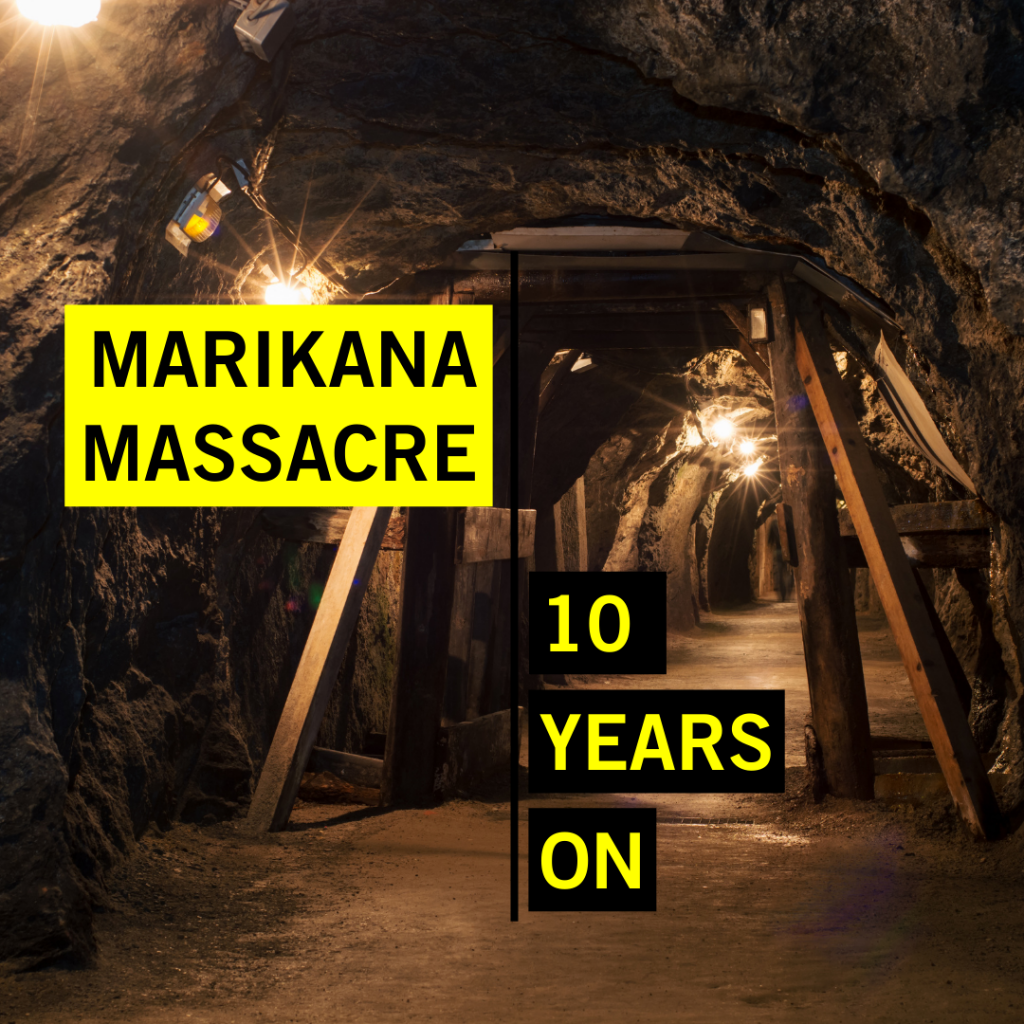
Pit toilets: Department of Basic Education kicking the can down the road
By Marike Keller, Amnesty International South Africa researcher
It’s the same old story – the government makes a promise; the promise isn’t upheld. What will it take for it to keep their promises, to abide by their legal mandate, to stop paying lip service, to stop making empty promises, and to take human rights seriously?
The Regulations Relating to the Minimum Uniform Norms and Standards for Public School Infrastructure, clearly spelled out certain deadlines by when the Department of Basic Education (DBE) needs to have accomplished specific goals related to public school infrastructure.
Included in these deadlines are for water supply and sanitation to be prioritised and be made available in schools by 2020. Yet 2020 came and went, and thousands of schools still had illegal pit toilets, which violate the rights to dignity, safety, and in some cases, life. The goal posts have shifted. Not by court order, or legally, but by internal decisions within the DBE. In a response to questions in Parliament in early 2022, Basic Education Minister Angie Motshekga, said that the department now plans to eradicate pit toilets during the 2022/2023 financial year. In a response to a parliamentary question in January this year, she specified that 3,898 schools have been identified for this initiative, yet the DBE’s 2020/21 annual report shows that 5,167 schools still have basic pit toilets. Furthermore, in her speech for the opening of schools in 2022, she claimed that “we remain with 1,423 schools, where basic pit toilets need to be replaced. All of these are scheduled for completion in 2022/23”.
The differing figures the department is publishing and speaking of point to a lack of consistency in reporting on data we see in the DBE and other government departments. This in itself is a cause for concern. What is even more worrying, however, is that first, the DBE consistently misses deadlines and shifts goalposts without repercussions. By not having eradicated pit toilets by 2020, they are in violation of South African law. Second, they are now proposing to remove these goalposts from legislation entirely, in effect removing any means of accountability.
The proposed amendments to the regulations were released in June with no notice given to the public and a very tight deadline to make written submissions. Once civil society organisations were made aware, requests for an extension to submit written submissions on the proposed amendments were made to the DBE by partner organisations, including Amnesty International South Africa (AISA). This request was granted and AISA made a submission, which you can read here.
While some proposed amendments were welcomed, what is most concerning is that timeframes for compliance were removed. These timeframes are necessary to ensure adequate budgeting and planning to meet the targets, maintain a sense of urgency, and for accountable governance. The removal of these timeframes to address non-compliance goes against the very objective of the regulations, which are “to provide for timeframes within which school infrastructure backlogs must be eradicated.”
Our concern is that the removal of the timeframes is in the context of many of the original deadlines having been consistently missed, infringing on the rights of many children to learn in a safe and healthy environment. The failure to meet targets and then deliberately removing them, does not instil any faith that the regulations will be implemented with the urgency required.
We therefore recommended that concrete timeframes remain in the amended regulations, and that pit toilets be eradicated immediately. The state has an obligation to respect, promote and protect the right to quality education. All learners have a right to learn in a healthy, safe, and dignified environment.
At AISA we will continue to monitor the developments related to these amendments and hold the government accountable to eradicate pit toilets by 2023. Promises made by the government will not go unnoticed. Have a look at our pit toilet tracker, where we continuously update statistics as they are released, on the number of schools that have pit toilets by province.
RIGHT TO QUALITY EDUCATION
The Department of Basic Education (DBE) issued draft amendments to the Regulations Relating to the Minimum Uniform Norms and Standards for Public School Infrastructure. These regulations outline the minimum standards of what school infrastructure should include and look like.
The proposed amendments are as follows:
The removal of deadlines, including for the eradication of all illegal pit toilets. The deadlines are what we use to hold the DBE accountable.
The removal of what information progress reports must include. This will make it difficult to hold provincial departments accountable.
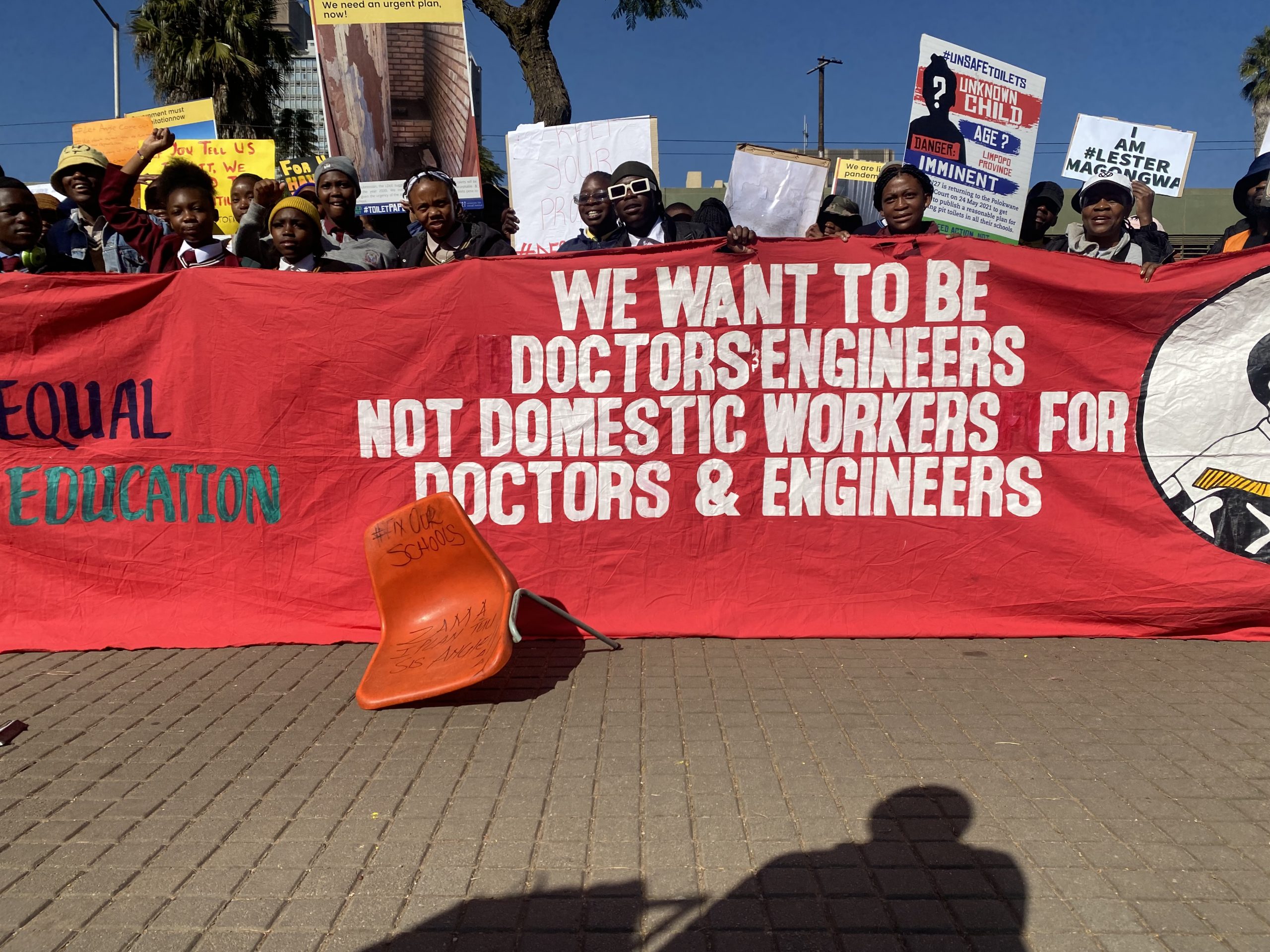
Amnesty International South Africa came out in support of other organisations such as Equal Education this month, to express outrage at the proposed new changes to the school infrastructure law by the department.
We believe that the changes will negatively affect efforts aimed at ensuring that every child has access to quality education and learns in a safe environment.
In 2020 and 2021 AISA released two reports on the state of Basic Education in South Africa. The reports titled South Africa: Failing to learn the lessons? The impact of COVID-19 on a broken and unequal education system and Broken and Unequal: The state of education in South Africa highlighted stark inequalities in the education system, exposing how the infrastructure of many schools that serve poorer communities do not meet the government’s own “Minimum Norms and Standards” for educational facilities.
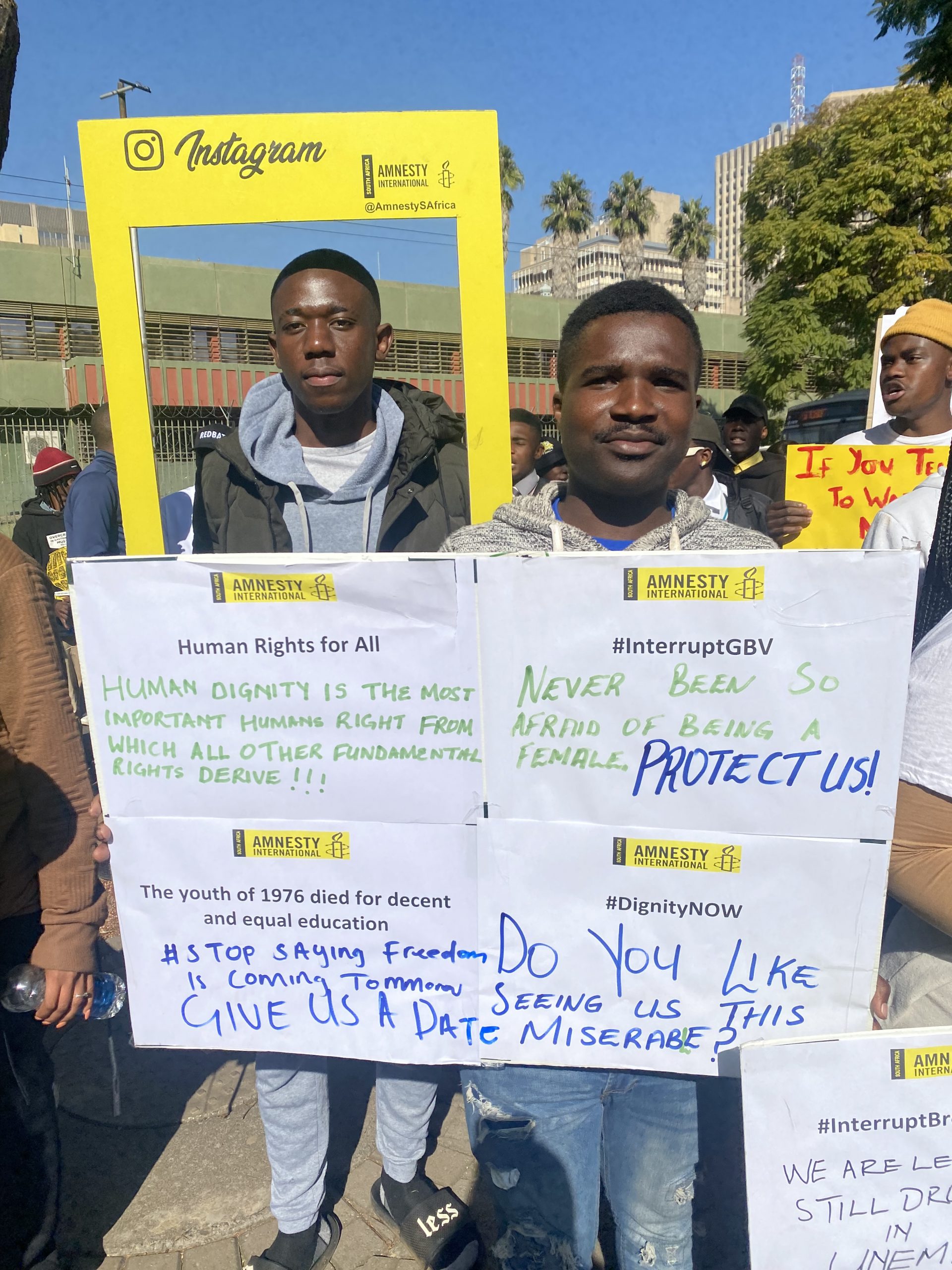
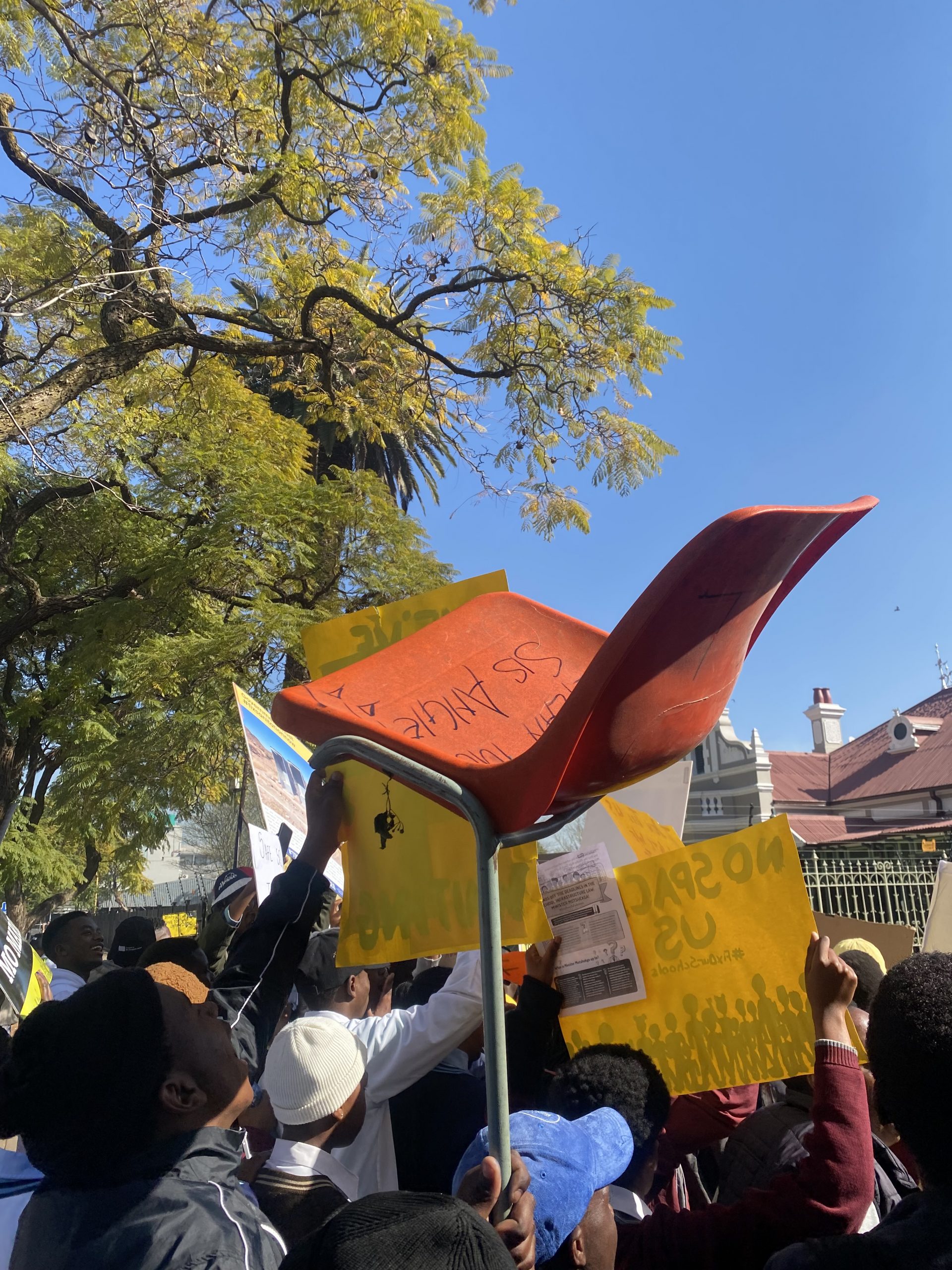
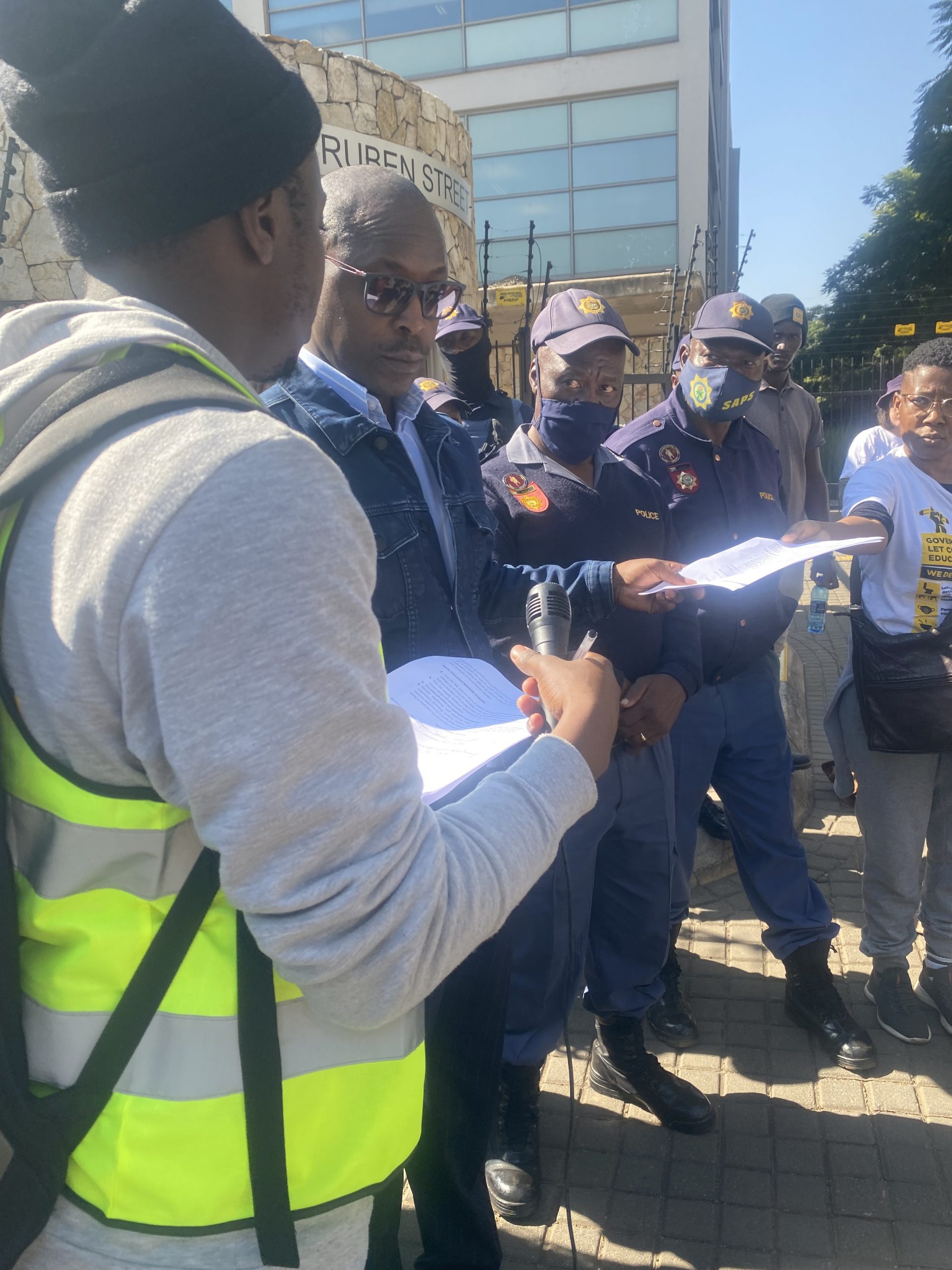
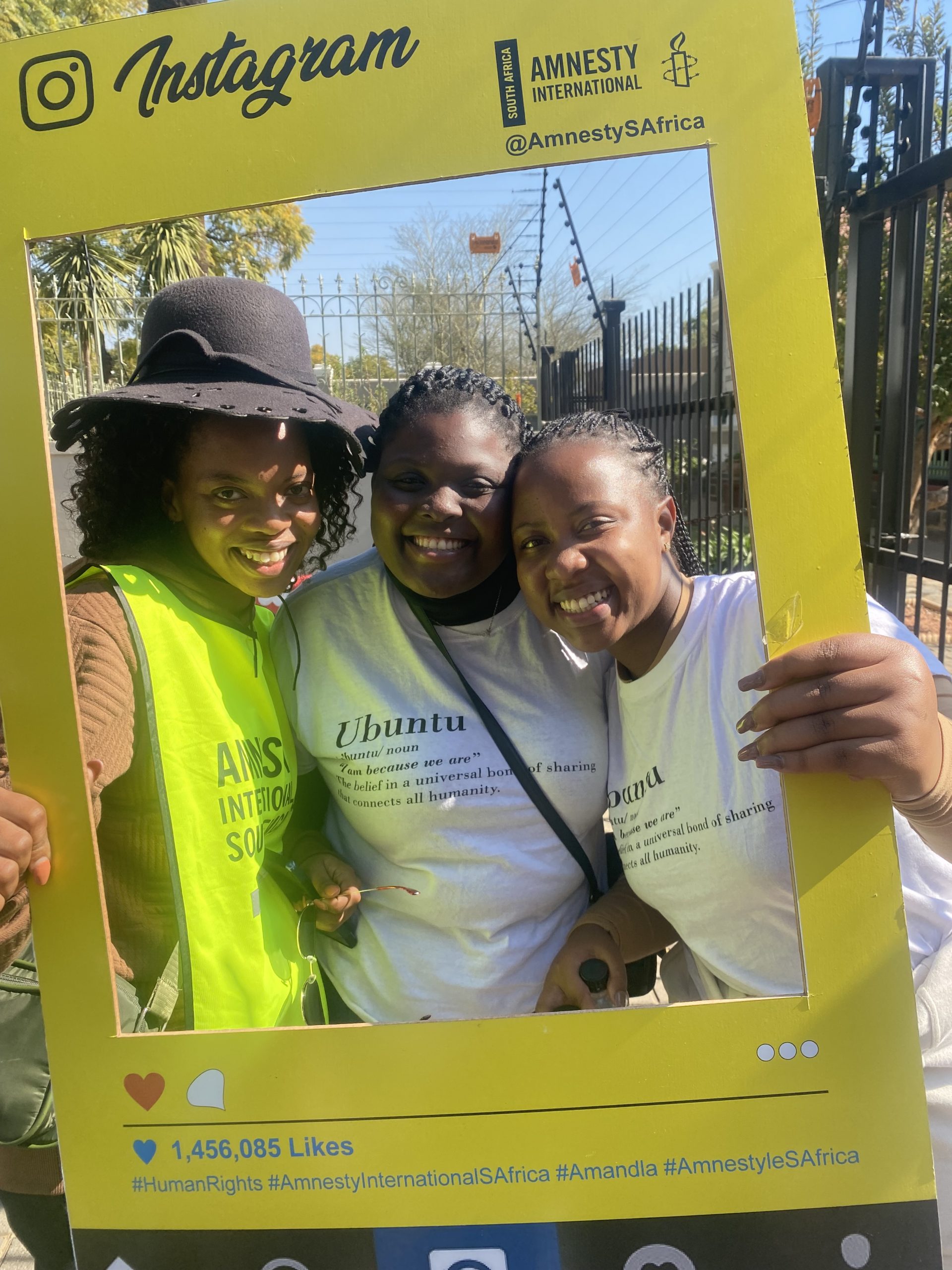
On 8 July 2022, Amnesty International South Africa joined Equal Education to demonstrate outside the Department of Basic Education in Pretoria.
AMNESTY INTERNATIONAL CALLS ON RAMAPHOSA AND BIDEN TO DISCUSS HUMAN RIGHTS ISSUES DURING THEIR MEETING
Amnesty International urged President Cyril Ramaphosa and United States President Joe Biden to discuss human rights issues facing both countries ahead of their meeting in Washington D.C. on 16 September 2022 .
In the letters, Amnesty highlighted ongoing concerns with human rights issues in South Africa such as gender-based violence, right to education and migration and xenophobia, and in the United States which includes access to abortion, gun violence and Covid-19 tests and treatment, which we hope the two presidents would raise with each other during their meeting.
You can find the letter to President Cyril Ramaphosa here and the letter to President Joe Biden here.
RIGHT TO PROTEST UNDER THREAT AROUND THE WORLD
The right to protest is under unprecedented and growing threat across all regions of the world, Amnesty International said on 19 July, as it launched a new global campaign, “Protect the Protest”.
“States are widening and intensifying efforts to erode this fundamental human right,” Amnesty International South Africa Executive Director Shenilla Mohamed said.
“In South Africa, the right to peaceful protest, which is enshrined in the Constitution, is constantly threatened by the excessive use of force and the use of rubber bullets by police. This has resulted in injuries and, in some cases, death.”
We cannot forget people such as Andries Tatane who died after being shot with rubber bullets during a service delivery protest in the Free State in 2011. More recently in 2021 Mthokozisi Ntumba, an innocent bystander, died when police fired rubber bullets on protesting university students and he was caught in the cross fire.
In both cases, police officers alleged to be responsible for the deaths were acquitted by the courts.
“There needs to be better investigations so that those responsible for the unlawful killing of protestors are held to account,” Shenilla Mohamed said.
“The heavy-handed response by police during protest action is a global phenomenon and not limited to South Africa and is in violation of international law and the principles of necessity and proportionality that should always guide the use of force.”
While governments have long relied on aggressive tactics to police protests, security forces have increased the amount of force they use in recent years.
So-called less lethal weapons, including batons, pepper spray, tear gas, stun grenades, water cannons, and rubber bullets are routinely misused by security forces. And, since the early 2000s, Amnesty International has documented a trend towards the militarisation of state responses to protests, including the use of armed forces and military equipment.
“In South Africa the police will argue that they are forced to use ‘less lethal’ weapons for crowd control and during protest action, but less lethal does not mean non-lethal and nobody should die from the use of these,” Shenilla Mohamed said.
The right to protest has also been under siege across the African continent, from Angola to Zimbabwe, Ethiopia to Sudan and Lesotho to Eswatini.
Protesters across the globe are facing a potent mix of pushbacks, with a growing number of laws and other measures to restrict the right to protest. These include the misuse of force; the expansion of unlawful mass and targeted surveillance; internet shutdowns and online censorship; and abuse and stigmatisation. Meanwhile, marginalised and discriminated groups are subjected to even further barriers.
“In recent years we have seen some of the biggest protest mobilisations for decades. Black Lives Matter, MeToo, and the climate change movements have inspired millions the world over to take to the streets and online to demand racial and climate justice, equity and livelihoods, and an end to gender violence and discrimination. Elsewhere, people have stood up in their thousands against police violence and killings, state repression and oppression,” said Shenilla Mohamed.
“Almost without exception, this wave of mass protest has been met with obstructive, repressive and often violent responses by state authorities. Instead of facilitating the right to protest, governments are going to ever greater lengths to quash it. This is why, as the world’s biggest human rights organisation, we have chosen this moment to launch this campaign. It’s time to stand up and loudly remind those in power of our inalienable right to protest, to express grievances, and to demand change freely, collectively and publicly.
Restrictive legislation, blanket bans, and emergency powers
A range of issues including the environmental crisis, growing inequality and threats to livelihoods, systemic racism and gender-based violence have made collective action ever more necessary. Governments have responded by introducing legislation imposing illegitimate restrictions on the right to protest. For example, we have seen blanket bans on protests, as seen in Greece and Cyprus during the Covid-19 pandemic. In South Africa gatherings were also prohibited during the Covid-19 pandemic, under the National State of Disaster regulations.
Governments of all kinds are also increasingly using emergency powers as a pretext to clamp down on dissent. This was seen at the height of the Covid-19 pandemic in countries including the Democratic Republic of Congo, where a government-imposed ‘state of siege’ has provided military and police officers with extensive powers to restrict protest in the provinces of Ituri and North Kivu since May 2021.
Demonisation of protestors
Governments across the world are justifying restrictions by arguing that protest constitutes a threat to public order and by stigmatising protesters, branding them “troublemakers”, “rioters”, or even “terrorists”. By casting protesters in this light, authorities have justified zero-tolerance approaches: introducing and misusing vague and draconian security laws, deploying heavy handed policing, and taking pre-emptive deterrent measures.
Inequality and discrimination
People who face inequality and discrimination, whether based on race, gender, sexual orientation, gender identity, religion, age, disability, occupation, social, economic or migratory status are also more affected by restrictions on their right to protest and face harsher repression.
For example, women, LGBTI and gender-non-conforming people are facing different types of gender-based violence, marginalisation, social norms and legislation. In countries including Sudan, Colombia and Belarus, women have been sexually assaulted for participating in protests, while in Turkey, for example, pride marches have been banned for years.
“Our campaign comes at a critical juncture. The precious right to protest is being eroded at a terrifying pace, and we must do all we can to push back,” said Shenilla Mohamed
“Countless protesters have been killed in recent years, and it is partly on their behalf that we must now raise our own voices and defend our right to speak truth to power through protests in the streets and online.”
SOUTH AFRICA: THOROUGHLY INVESTIGATE TAVERN KILLINGS AND BRING THOSE RESPONSIBLE TO BOOK
Thorough police investigations are needed into the killing of more than 20 people at taverns in Gauteng and KwaZulu-Natal, so that those responsible are held accountable, Amnesty International South Africa said.
This was after 21 people were killed in separate shootings at three popular taverns in Gauteng and KwaZulu-Natal on the same weekend in July.
Two people were shot and killed at a tavern in Katlehong on the Friday, four people gunned down in a similar shooting in Pietermaritzburg on the Saturday, and 15 in Soweto on Sunday.
Read our full statement here.
SOUTH AFRICA: MINING FIRM MUST ACCOUNT FOR THE DAM BURST DISASTER RESULTING IN LOSS OF LIVES AND DESTRUCTION
The mining executives responsible for the Jagersfontein mine dam wall burst, which has claimed lives and caused major destruction to the community, must be held accountable for the loss of lives, homes and people livelihoods, Amnesty International South Africa said on 13 September.
According to reports three people were killed and more than 40 people injured when the banks of the mining dam burst in the Free State town.
Read the full statement here.
We stand with @SAEditorsForum in support of News24 journalist @karynmaughan. Journalists must be allowed to do their work free of harassment, intimidation, threats, and reprisals. https://t.co/Ngmrwl5qdd
— @AmnestySAfrica (@AmnestySAfrica) September 7, 2022
Enough is Enough!
— @AmnestySAfrica (@AmnestySAfrica) August 31, 2022
The AG's report on @GovernmentZA’s response to the KZN floods confirms its inadequate response to the disaster that killed over 400 people & left thousands displaced. The failure to act in a timely & transparent way demonstrates neglect by gov to protect people
The @SAPoliceService must thoroughly investigate the killing of a protester in #Tembisa so that those responsible for the unlawful killing are held to account. Authorities must also show restraint.
— @AmnestySAfrica (@AmnestySAfrica) August 1, 2022
We are outraged by the violation of women at #Krugersdorp. No matter who the perpetrators are they must be held accountable and more must be done to protect women. @SAPoliceService & @NPA_Prosecutes must act swiftly to ensure justice for all victims.
— @AmnestySAfrica (@AmnestySAfrica) August 1, 2022
In the third quarter of 2022, Amnesty International South Africa carried out 46 interviews, on various topics such as water and climate change; protests and our flagship campaign; the crisis of early pregnancy, gender-based violence and the shrinkiong civic space in South Africa.
On 6 July 2022, Amnesty International South Africa’s Activism Coordinator: Mobilising Alicia Jooste spoke to eNCA about the launch of our climate justice campaign focusing on water security.
Watch the interview here

On 8 July 2022, Amnesty International South Africa Researcher Marike Keller spoke to SAFM about the department of basic education trying to evade accountability by removing deadlines in the draft amended regulations relating to minimum norms and standards of school infrastructure
Listen to the interview here
On 2 August 2022, Amnesty International South Africa Executive Director Shenilla Mohamed spoke to eNCA about the service delivery protest which had engulfed Tembisa.
Watch the interview here

On 4 August 2022, Shenilla Mohamed spoke to Newzroom Afrika about illegal miners in Krugersdorp and the gang rape of a group of women.
Watch the interview here

On 16 August 2022, Amnesty International South Africa Campaigner Sibusiso Khasa spoke to Newzroom Afrika about the 10 year anniversary of the Marikana massacre and the failure to deliver promised houses.
Watch the interview here

On 23 August 2022, Amnesty International South Africa’s Research Consultant Cassandra Dorasamy spoke to the SABC’s Channel Africa about the crisis of early pregnancy.
Listen to the interview here

On 13 September 2022, Shenilla Mohamed spoke to eNCA about the mine dam disaster in Jagersfontein in the Free State.
Watch the interview here

On 16 September, Amnesty International South Africa Media & Comms Officer Genevieve Quintal spoke to Newsroom Afrika about the letters the organisation sent to South Africa President Cyril Ramaphosa and US President Joe Biden ahead of their meeting in Washington.
Watch the interview here

Chapter News
AI VAAL
On 16 July, AI Vaal chapter held a workshop at Savanna City on the right to water.
The chapter has been doing a lot of work around educating the community on how they can claim their right to water.
Water is a right, not a privilege.
On 27 August 2022, the AI Vaal chapter hosted a community dialogue on the right to water in South Africa and introduced climate change as a human rights issue.
AI UNIVERSITY OF JOHANNESBURG (UJ)
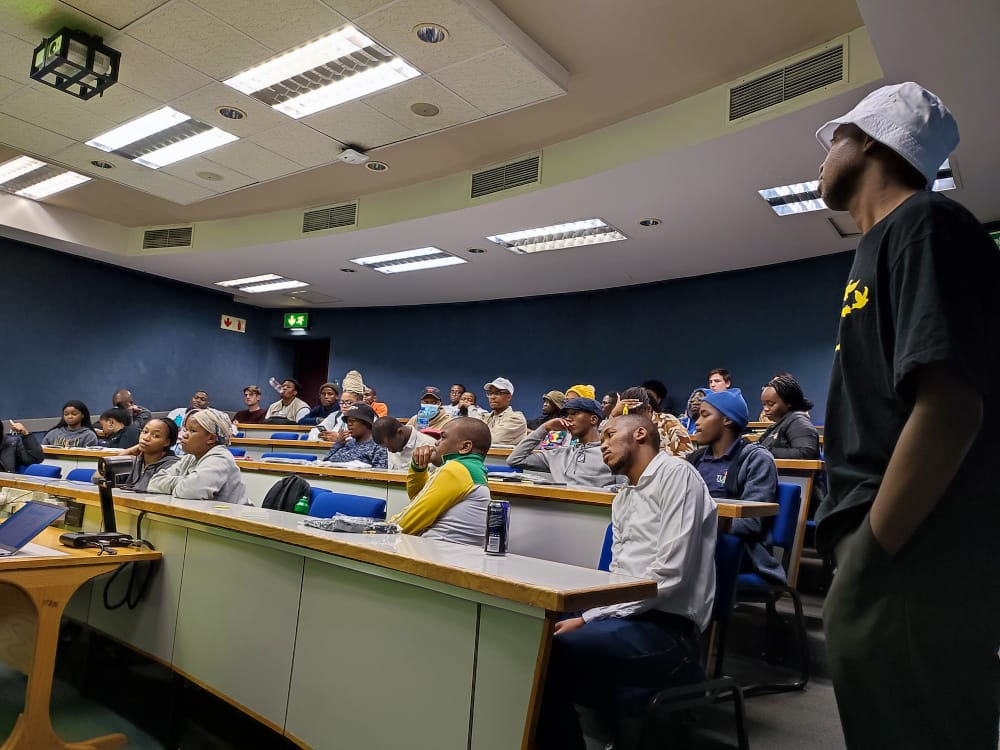
The AI UJ chapter hosted its first interschool debate where high school pupils debated topics such as bullying in schools, the quality of education in South Africa, and water as a right and not a privilege.
The AI Vaal chapter was invited to the KeMoja Exhibition where they raised awareness on early pregnancy and the high levels of GBV in township communities.
The chapter reached over 100 new supporters and actions from young people within the community who would like to make a change.
AI WITS
The AI Wits chapter hosted a self-defence class to commemorate Women’s Month in August and shine a light on the gender-based violence crisis facing South Africa, so that those attending are able to defend themselves if they find themselves in trouble.
The AI Wits chapter hosted its first inter schools debate with schools from around Johannesburg and Soweto where high school learners debated environmental topics which highlight the importance of the changing climate in South Africa.
AI UCT
The AI UCT chapter held its first annual general meeting at the University of Cape Town where it discussed how to grow the movement on campus in 2022/23 and plans for the year.
The chapter also used the opportunity to talk through campaigns including how young people can be active voices of change within their campuses.
AI Univeristy of Pretoria (UP)
AI UP held its first annual general meeting where it discussed how to grow the movement on campus in 2022/23 and plans for the year.
The chapter also used the opportunity to talk through campaigns and how young people can be active voices of change.
WALK FOR FREEDOM
The Palestine Solidarity Alliance invited AISA activists to join in the walk for freedom on 25 September 2022 in Lenasia. AI Wits, AI UJ as well as AISA’s member of the Global Youth Collective, Alwande Khumalo, joined the walk along with other civil society organisations in solidarity with Palestinians everywhere.
YOUTH BLOGS
Florentine Vangu, a law student from Wits University in Johannesburg wrote a piece on adultification bias, which is defined by the notiona of innocence and vulnerability not being afforded to children due to their identity, physical or situational context.
READ IT HERE
Shruthya Sivakumar whi is currently studying law at Wits University has written about why abortion is a human right.
READ IT HERE
YOUTH NEWSLETTER
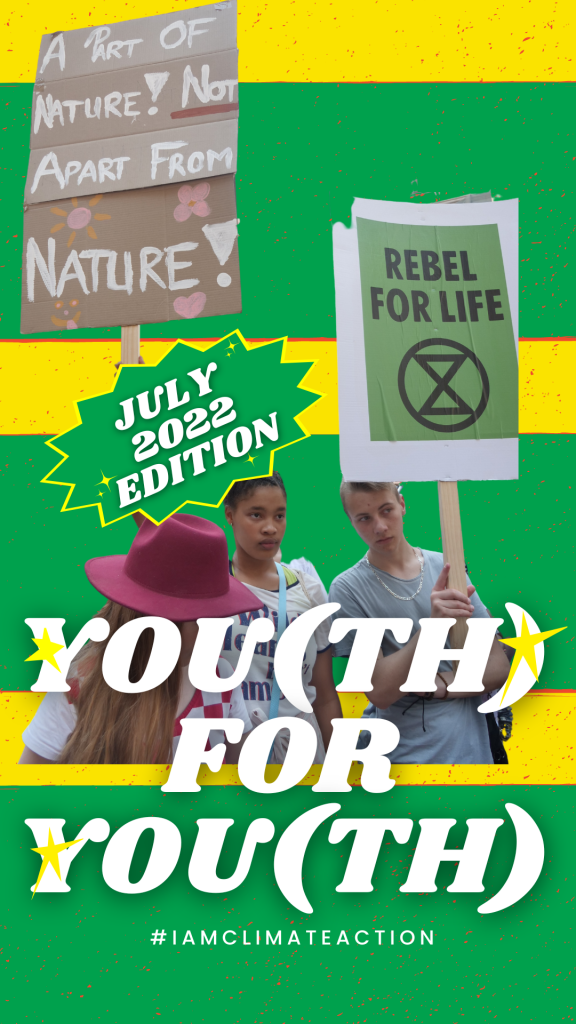
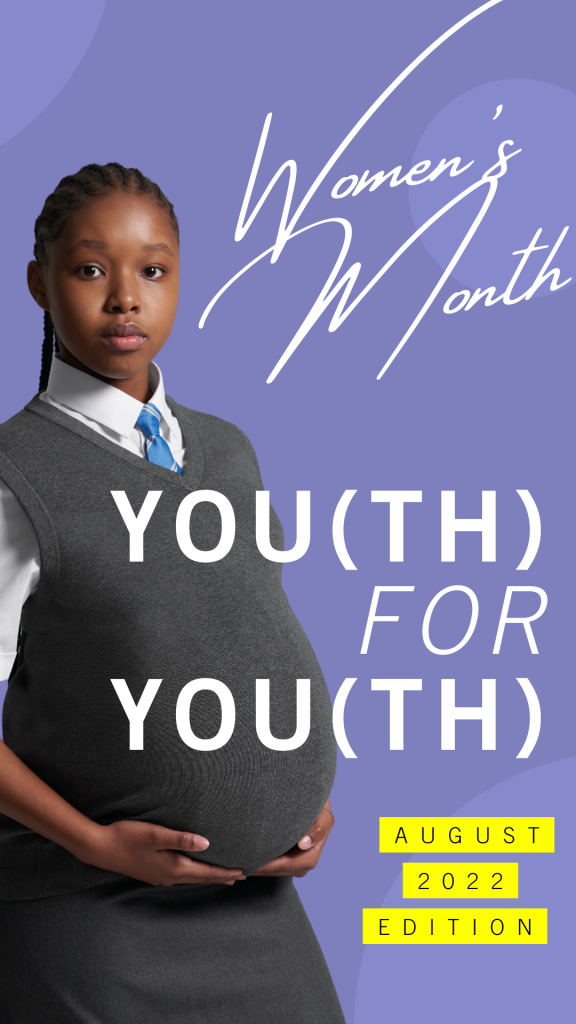
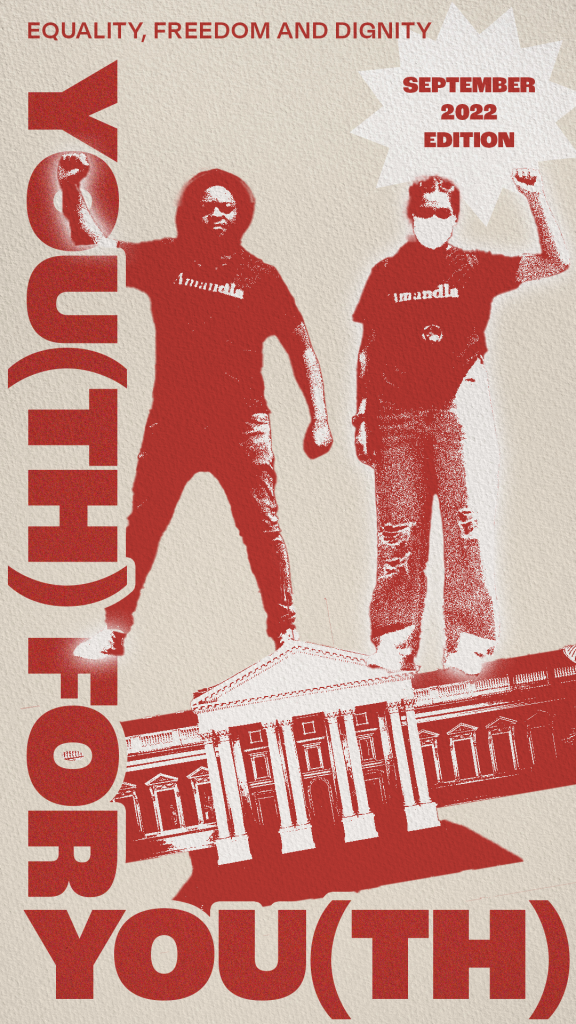
Amnesty International South Africa publishes a monthly youth newsletter, YOU(th) for YOU(th), where you can see more of what our youth activists are doing and get their views on human rights issues.
You can find all our youth newsletters here.
You can read the three most recent editions below.
Matla! Ke a rona! (The power is ours!)
LESOTHO: AUTHORITIES MUST TACKLE POLICE BRUTALITY, TORTURE AND UNLAWFUL KILLINGS BEFORE AND AFTER ELECTION
Lesotho’s authorities and incoming government must address unresolved cases of police brutality, torture and unlawful killings and ensure accountability for these human rights crimes beyond the electioneering period for the 7 October vote, Amnesty International said on 28 September 2022.
“A dangerous pattern of human rights violations, including torture, unlawful killings, and excessive use of force by members of the security forces in Lesotho has been a common feature of the past five years under the current coalition government,” said Muleya Mwananyanda, Amnesty International’s Director for East and Southern Africa.
“Political candidates vying for leadership positions, including parliamentary seats, in the upcoming general elections must make a commitment to put respect for human rights and accountability for past human rights violations front and centre of their campaigns. If elected, they must ensure access to justice and effective remedies for the victims of these human rights crimes.”
Read the full statement here.
Zimbabwe: Authorities launch crackdown against students protesting high feesAuthorities must drop sinister charges against University of Zimbabwe students who have been peacefully protesting high fees and affirm their right to freedom of assembly and expression, Amnesty International said 15 September. Police arrested 14 students at the University of Zimbabwe on 12 September 2022 after they embarked on peaceful #FeesMustFall demonstrations against high tuition fee hikes by the university. While five more students were arrested on 14 September, and taken to Avondale police station and face charges of “disorderly conduct”, some of those who were arrested on 12 September appeared in court two days later. Read the full statement here.
|
Angola: Unlawful killings, arbitrary arrests and hunger set election tone
Angola has faced an unprecedented crackdown on human rights, including unlawful killings and arbitrary arrests, in the lead up to the 24 August election, Amnesty International said on 16 August.
In its new briefing, “Make the vote meaningful for human rights observance: Human rights manifesto for Angola ahead of the 2022 general election”, the organization details how Angolan authorities have increased their clampdown on human rights amid a deteriorating humanitarian situation compounded by drought-induced hunger in the country’s southern region.
“Angola has been characterized by an increase in brutal crackdowns on human rights in recent years, including repression of any form of dissent. Protesters, including young people demanding accountability and their socio-economic rights, have not been spared,” said Deprose Muchena, Amnesty International’s Director for East and Southern Africa.
Read the full response here.
Ethiopia: Authorities must investigate massacre of ethnic Amhara in Tole
The Ethiopian authorities must urgently launch an impartial investigation into the summary killing of over 400 Amhara residents of Tole Kebele in Oromia region on 18 June, Amnesty International said on 21 July.
Hundreds of people were killed and scores injured in an attack that survivors and victims’ family members say was committed by the Oromo Liberation Army (OLA).
The organization interviewed 10 people, including five eyewitnesses as well as survivors, victims’ family members and a local official. Interviewees consistently recounted summary killings, burning of homes and looting. Satellite imagery analysis by the organization’s Crisis Evidence Lab also corroborates claims that fires erupted in villages in Tole Kebele on 18 June.
Read the full response here.
UNGA: A CHANCE TO RESTORE TRUST IN A BESIEGED INTERNATIONAL SYSTEM
Amnesty International’s Secretary General Agnès Callamard attended the 77th Session of the UN General Assembly (UNGA) in New York between 19 and 23 September.
Ahead of her visit, Agnès Callamard said:
“Armed conflict, food shortages, deepening inequalities and the mounting climate emergency are testing the effectiveness of the international community like never before. Everywhere we turn today lies evidence of failings of the past: civilians from Ukraine to Ethiopia dying in their thousands while the perpetrators of war crimes walk free, huge swathes of Pakistan underwater, and millions of people worldwide on the brink of famine.
“Instead of alleviating the suffering caused by conflicts, members of the UN Security Council have allowed rampant abuse of the veto power to exacerbate it. This tragic betrayal of the Security Council’s mandate is but one example of the UN’s failures to rise above politics and national self-interest. This week we need bold, coordinated action from UN member states, who must show global leadership and live up to the principles on which the UN is founded. Global problems of the scale we are now confronting can only be addressed through global solutions.”
Read the full statement here.
Russia: More than 1,300 protesters detained after Putin’s partial military draft
Responding to the detention of at least 1,386 peaceful protesters who took part in rallies across Russia following President Vladimir Putin’s call to mobilize additional troops to fight in Ukraine, Denis Krivosheev, Amnesty International’s Deputy Director for Eastern Europe and Central Asia, said:
“As President Vladimir Putin seeks to boost the dwindling supply of troops for Russia’s invasion of Ukraine, thousands of Russians across the country have peacefully marched on the streets protesting against mobilization and the war. They are raising their voices even amid the stifling of their rights to freedom of expression and peaceful assembly, and as new repressive laws criminalize all forms of anti-war activity.
“Everyone has the right to freely express their opinions and protest peacefully, including in response to Russia’s aggression against Ukraine. All those detained solely for peacefully protesting against mobilization and the war must be immediately and unconditionally released, and all reprisals against dissenting voices in Russia should end.
Read the full response here.
Syria/UN: UN General Assembly must take responsibility for ensuring aid continues to reach civilians in need
Ahead of a United Nations General Assembly meeting on 21 July to discuss the Russian veto of a Security Council resolution which would have allowed the UN to continue delivery of cross-border aid to north-west Syria for one year, Agnès Callamard, Amnesty International’s Secretary General, said:
“Member states must not allow the cynical exploitation of vital humanitarian issues to be a political bargaining chip at the UN Security Council. This meeting must be the start of the UN General Assembly assuming responsibility towards protecting those most in need of humanitarian assistance, without compromise. The General Assembly must state unequivocally: International law is clear; the Security Council authorization should not be needed to deliver humanitarian aid to those in need.”
“The Syrian government and the Russian veto power must not stand in the way of providing humanitarian assistance to millions of civilians in desperate need in north-west Syria, as this amounts to violating their rights to life, to an adequate standard of living including housing, water and sanitation, and to health.
Read the full statement here.
Pakistan: Deadly floods reminder to wealthy countries to remedy unfettered climate change
Wealthier states that have responsibility for climate change must remedy historic injustices and support low-emitting countries like Pakistan after deadly floods have shown the devastating impact of climate change, said Amnesty International.
“States that have enriched themselves using fossil fuels and other unsustainable practices must meet their international obligations. They must provide compensation and other forms of remedy for the loss and damage people are suffering in Pakistan,” said Rimmel Mohydin, Amnesty International’s Pakistan Campaigner.
Since 1959, Pakistan has accounted for 0.4% of historic emissions and yet it is listed as one of the most climate vulnerable places in the world, according to joint findings by the World Bank and Asian Development Bank. These floods alone have by early estimates, cost the country USD 10 billion. The recent floods are a devastating reminder that the consequences of climate change are intensifying, underscoring the importance of states catching up with their adaptation and mitigation efforts.
Read the full statement here.