Recently there have been a spate of horrendous stories of women and children being brutally attacked and murdered.

This is compounded by the frightening crime statistics. The quarterly statistics released by Police Minister Bheki Cele in June showed that the murder of women increased by 17.5%. This means that 898 women were killed in the first three months of this year. That is around 10 women a day. The murder of children also had an exponential increase of 37.2% during the same period. A total of 306 child murders were children under the age of 17. 

Meanwhile, sexual offences increased by 13.7%. Rape increased by 13.7% with 10,818 reported cases from January to March 2022. Of these, 4,653 took place at the home of the victim or the home of the rapist. Cases of sexual assault increased by 13.4%.

There are no words to describe this frightening reality and the fear so many live under. It is not enough that every quarter when the crime statistics are released, the government comes out and says it is “shocked” and “more must be done”. 

The reality is that the government continues to fail people, especially women and children, in the country who continue to face horrendous crimes against them, with little to no action from the country’s duty bearers. The State has an obligation to protect people’s rights to life and security and we are not seeing this obligation realised.

There is all this rhetoric about fighting gender-based violence in South Africa. 

President Cyril Ramaphosa has announced a number of initiatives to help fight gender-based violence and femicide (GBVF), but to date, very few of these have been implemented and GBVF remains staggeringly high, and is on the rise, in the country.

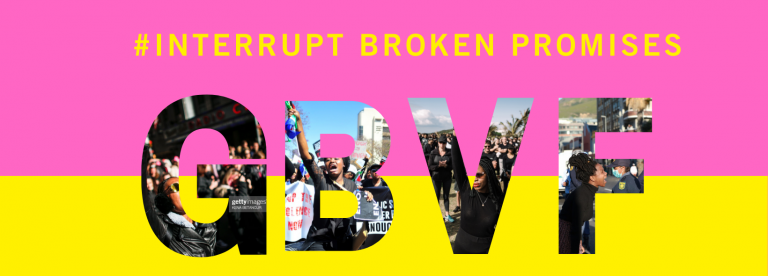
This is why Amnesty International South Africa launched the third phase of our #InterruptGBV campaign, called #InterruptBrokenPromises. 

There doesn’t seem to be any political will to actually deal with GBVF decisively. However, each of these numbers is a human being with a family, and we need to stop looking at these as statistics. These are people whose lives have been brutally taken away or traumatised.

The government has broken its promises to the people. And it continues to break them.

But it is not only during the fight against GBV that promises have been broken. 

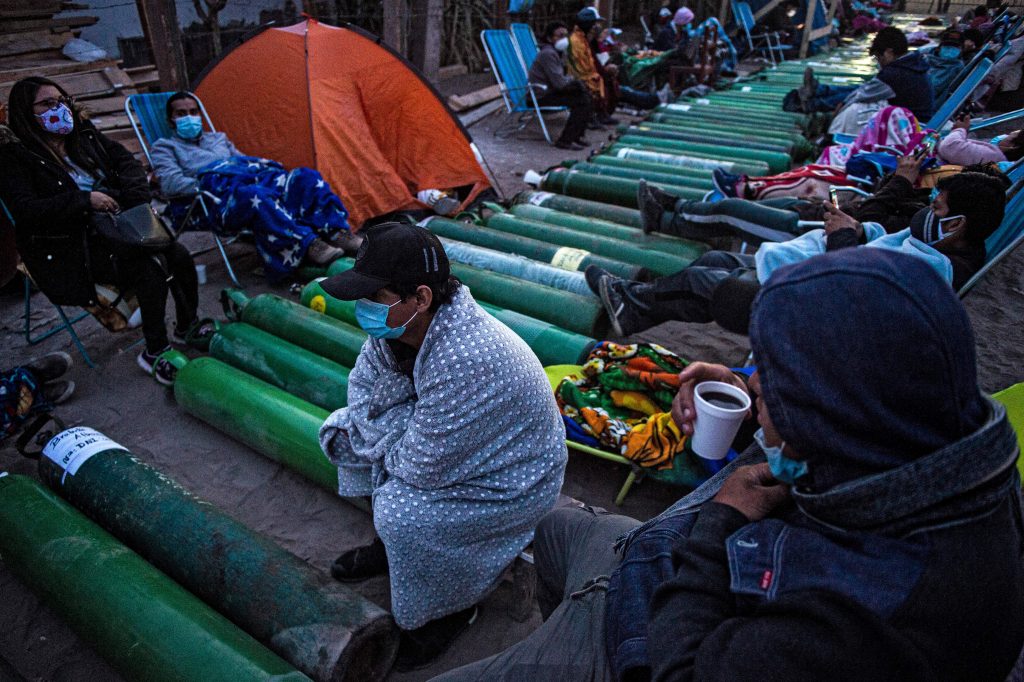
Just look at the broken and unequal education system, the state of the country’s health system and facilities, the state of infrastructure and basic services, all of these are crumbling because of the government’s broken promises.

In the second quarter of 2022, the AISA team has come face-to-face with these broken promises. 

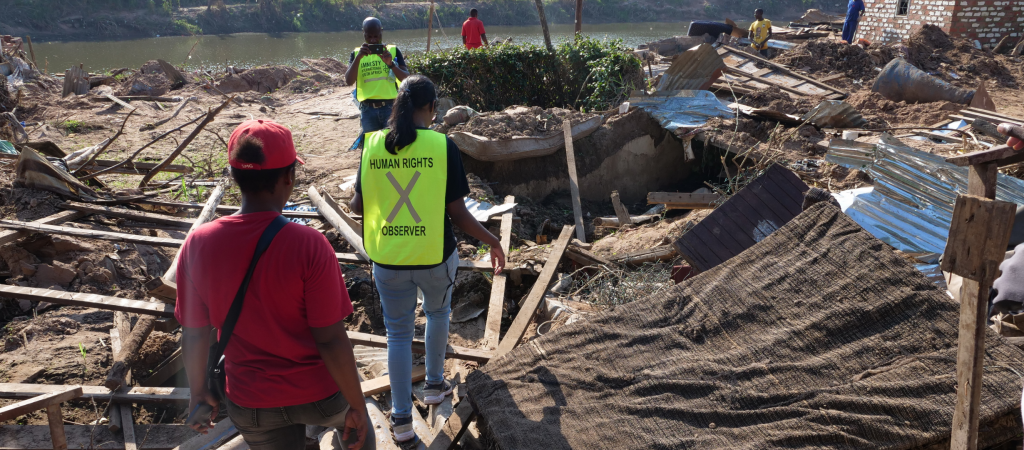
Following the devastating April floods in KwaZulu-Natal, an AISA team went on a field visit to the province in May. Some of the areas visited had been without water for over a month at this stage with little to no intervention from the government. People felt that their rights to safety, water, sanitation, dignity and privacy have been neglected by the government. In this edition of Lesedi, our research consultant, Cassandra Dorasamy, and marketing trainee, Dorothy Rowland, who were part of the field trip, give us a personal account of their visit to the flood hit areas.

A team from AISA also visited Nelson Mandela Bay this month which is dealing with a severe water shortage and is facing ‘day zero’. Our campaigner, Sibusiso Khasa, and media and communications officer, Genevieve Quintal, spent two days speaking to communities and found that the municipality was fast tracking the city’s day zero, by failing to ensure that water was not lost to thousands of leaks. You can read more about this in this edition of Lesedi.

AISA also continued to highlight, especially during Youth Day, how the country’s broken and unequal education system has an impact on the high youth unemployment numbers. Government must focus on providing quality education in a safe environment, if it wants to decrease these numbers. AISA has joined Equal Education and other civil society groups in their outrage at the proposed new changes to the school infrastructure law by the department of basic education. These proposed changes undermine every child’s right to quality education. 

AISA also made some important submissions this quarter towards changing health regulations and legislation on hate speech.

We made a submission to the health department on the proposed amended regulations Relating to the Surveillance and the Control of Notifiable Medical Conditions under the National Health Act of 2003. As Amnesty we believe the proposed amendments must be discarded and rewritten to align with the Constitution and international human rights law. 

Amnesty is also chairing the Hate Crimes Working Group (HCWG). In 2021, The Prevention and Combating of Hate Crimes and Hate Speech Bill was revived, after lobbying and advocacy by the HCWG. Sibusiso Khasa, who represents Amnesty in the HCWG, made an oral submission on behalf of the group to Parliament this year. 

All of this shows that there is still a lot of work to be done, and it is up to all of us to stand up and demand accountability and say we will no longer accept broken promises!

Aluta Continua

Shenilla Mohamed

People power: A key tool to #InterruptBrokenPromises

By Sibusiso Khasa, Amnesty International South Africa CAMPAIGNER

“Wishful thinking – good luck!” 

“Why do I not believe them?”

“I think it’s going to take 10 years to clear the backlog” 

These are some of the comments on social media as Amnesty International South Africa (AISA) urged people to support the call for the South African Police Service (SAPS) to clear the DNA backlog of 58,000 cases by September 2022 as promised by the Minister of Police, Beki Cele. 

The call is part of our #InterruptBrokenPromises campaign, which seeks to hold the government accountable for its failure to implement some of the initiatives that are aimed at curbing gender-based violence and femicide (GBVF). Part of those broken promises are the government’s failure to reduce the GBV-related forensic cases backlog and the failure to establish the National Council on Gender-Based Violence and Femicide (NCGBVF), despite promising to establish it in 2019. The NCGBVF is supposed to be the custodian of the National Strategic Plan on Gender-Based Violence and Femicide and oversee its implementation. 

While the country waits for these initiatives to be implemented, recent crime statistics indicate the urgency that this needs to be dealt with. The statistics published by Minister Cele on 3 June show that the murder of women increased by 17.5% with 898 women killed between January and March 2022. Meanwhile, sexual offences increased by 13.7% and rape increased by 13.7% with 10,818 reported cases in the three month period. Of these, 4,653 took place at the home of the victim or the home of the rapist. Cases of sexual assault increased by 13.4%.

Given these government failures to tackle GBVF, it is understandable why some people have lost hope and have little to no faith in government and the criminal justice system. However, history has taught us that if people come together to demand justice even systems like apartheid, which was a crime against humanity, can be dismantled. While change might take time, it is possible to have a positive impact through people power. 

The case of Popi Qwabe and Bongeka Phungula is just one example of what people power can do in the bid to get them and their families justice. Due to people power and ongoing lobbying and advocacy efforts by AISA, the National Prosecuting Authority (NPA) committed to prioritising Popi and Bongeka’s case. 

The best friends were shot dead and their bodies dumped by the side of the road in Johannesburg in 2017. The police investigation that followed was, according to the families, riddled with mistakes. The families say the police did not check for fingerprints and that the phones belonging to the two girls were never traced. Two suspects who had been apprehended in connection with their deaths were later released and the case was struck off the roll.

On International Women’s day – 8 March 2021 – AISA, along with Popi’s sister and mother, delivered 316,796 petition signatures, which were gathered across the globe through Amnesty International’s Write for Rights campaign, to the National Office of the South African Police Service. They met with the Deputy Commissioner for SAPS, the Head of Detective Services, the Head of the Violence against Women and Children Unit and a representative from Visible Policing. The police revived the investigation into the murders after intense campaigning from AISA. They completed their investigation the same year and handed the case over to the country’s NPA. 

While the NPA has said it will give Popi and Bongeka’s case attention, we are yet to receive an update from them. So AISA continues and will continue to put pressure on the NPA to prosecute the alleged perpetrators. This is why, once again, we need people like you to ensure that this happens and that the government implements initiatives that are aimed at curbing the scourge of GBVF. 

Are you in? #InterruptBrokenPromises now!

THE STATE CONTINUES TO FAIL WOMEN, DELIVERING BROKEN PROMISES INSTEAD OF CHANGE

President Cyril Ramaphosa’s government continues to fail the women in the country who continue to face horrendous crimes against them, with little to no action from the country’s duty bearers, Amnesty International South Africa said as it launched its #InterruptBrokenPromises campaign.

President Ramaphosa has announced a number of initiatives to help fight gender-based violence and femicide (GBVF), but to date, very few of these have been implemented and GBVF remains high in the country.

“GBVF in South Africa is pervasive, yet the state does not seem to be taking this seriously, despite it paying lip service in its commitment to help fight the scourge,” Amnesty International South Africa Executive Director Shenilla Mohamed said.

Read our full statement here.

TAKE ACTION AND #INTERRUPTBROKENPROMISES

In 2019, following years of public outcry and increased pressure from people and civil society to address the unacceptably high level of gender-based violence and femicide (GBVF) in South Africa, President Ramaphosa announced that urgent action was required. Under the National Strategic Plan on Gender-Based Violence and Femicide, this included the commitment of additional funding to tackle GBVF, resources for training personnel in the criminal justice system and the reduction of the GBV-related DNA backlog.

Yet, in the 2020/21 financial year, 2,655 women were murdered in South Africa. This is equivalent to 7 women murdered every day and one woman murdered every three hours. The most recent quarterly crime statistics also saw a 4.2% increase in women murdered compared to the previous period. 

So the question we need an answer to is, what happened to the additional resources, budget and personnel the President committed to deploying in 2019?

To find out, join us to #InterruptBrokenPromises by demanding:

The immediate establishment of the National Council on Gender-Based Violence and Femicide, including the development of a costed and funded operational plan.

The DNA backlog of 58,000 cases is cleared by the end of September 2022, as publicly committed to by Minister for Police Bheki Cele on 24 March 2022.

The immediate rollout of appropriate, mandatory and continuous victim-centric training for personnel in the criminal justice system, increased transparency about how many people have been trained, and the impact of the training.

PROPOSED AMENDMENT TO HEALTH REGULATIONS RISKS BREACHING HUMAN RIGHTS

By Genevieve Quintal, Amnesty International South Africa Media & Communications Officer

After two years of dealing with the Covid-19 pandemic, South Africa finally ended its National State of Disaster in April 2022. 

But along with the termination of the state of disaster and the majority of lockdown regulations, came an amendment to the regulations Relating to the Surveillance and the Control of Notifiable Medical Conditions under the National Health Act of 2003. 

The Department of Health, who gazetted the amended regulations, invited the public to comment on the proposals. 

After reading through the amended regulations it was clear that as Amnesty International South Africa, we needed to submit our comments to the department. 

The amended regulations are meant to prevent and control the spread of Covid-19 and other Notifiable Medical Conditions (NMCs) beyond the declared National State of Disaster, but what the department has gazetted risks breaching human rights guaranteed by the Constitution. This included the rights to freedom of movement and freedom of personal security. 

We raised a number of serious concerns relating to the potential permanent nature of the regulations and the criminalisation of non-compliance with the regulations.

Our overall recommendation to the Department of Health was that the proposed regulations be discarded and rewritten to align with the Constitution and international human rights law. 

Originally, the public was given until 15 April to comment but on 14 April 2022, Health Minister Joe Phaahla announced an extension on the submission deadline to 24 April. On 5 May 2022, the period for public comment was extended again for another three months. The new closing date for submissions is 5 July 2022. 

Read Amnesty International South Africa’s full press release on the amended health regulations here and the full submission to the Department of Health here


COVID-19: PANDEMIC RESTRICTIONS MAGNIFIED DISCRIMINATION AGAINST MOST MARGINALISED GROUPS

Marginalised groups, including LGBTI+ people, sex workers, people who use drugs, and those experiencing homelessness, were disproportionately impacted by Covid-19 regulations that exposed them to further discrimination and human rights abuses, Amnesty International said in a new report assessing the impact of pandemic restrictions across the globe.

Based on an online survey of 54 civil society organisations in 28 countries, which included South Africa, the report documents how an overly punitive approach to the enforcement of Covid-19 regulations—that saw people fined, arrested and jailed for non-compliance with public health measures— resulted in already marginalised groups facing increased harassment and violence from security forces. The approach also left them with reduced access to essential services including food, healthcare and housing.

Read our full statement on how marginalised groups in South Africa were treated here and a copy of the full report There is no help for our community: The impact of States’ Covid-19 responses on groups affected by unjust criminalization’ here.

WITNESSING THE KZN DEVASTATION, BUT ALSO A GLIMMER OF HOPE

By Cassandra Dorasamy, Amnesty International South Africa Research Consultant and Dorothy Rowland, Amnesty International South Africa Marketing Trainee

In April and May, KwaZulu-Natal was hit by intense rainfall and flooding, resulting in the loss of over 400 lives and the displacement of thousands of people. The news media was full of images, videos and stories of families who lost loved ones, infrastructure that was destroyed, and communities going without running water for weeks. As news came in of the government’s recovery plans, which included a relief fund, many concerns were raised in the public domain. The public wanted to know: Will the relief funds be spent appropriately? Will it reach those in need? How long will it take for the government to assist those who have been affected?

Amnesty International South Africa visited affected areas six weeks after the April floods to hear from people who have been directly affected. We asked them about their experience of the floods, how they have been assisted, and what they would like to say to the government. This is what we heard.

Water and Sanitation 

Residents from the different areas we visited told us they had not had water since the floods occurred. 

“We didn’t have water for three whole weeks, we were battling to get water. There was a Muslim community from Isipingo Hills that offered to give us water and we would then maybe get water once a day or else there was no water. We cannot be living in a place like this that is so unhealthy. When it rains, the place gets flooded. It’s very unhealthy for us to be living with kids and have them getting sick all the time. Ever since the floods, my son has been getting sores because the water was dirty,” Nicole* from Isipingo Transit Camp told us.

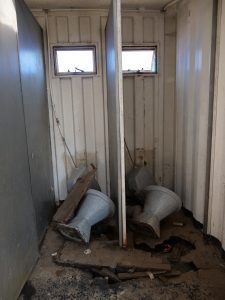
As we continued walking through the transit camp, we were led to the communal bathrooms. The entrance to the bathrooms had become inaccessible due to the remaining overflow of water which forced residents to create sandbag stepping stones, which were also gradually absorbing water. Inside, some of the toilets had been uprooted by the floods, leaving the community with fewer sanitation facilities. 
Housing 

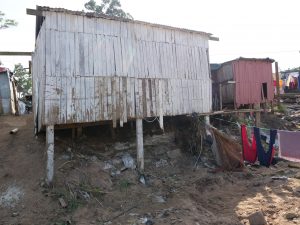
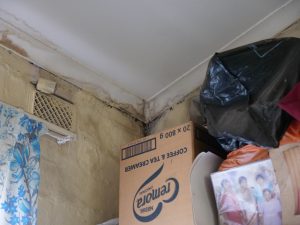
The areas we visited had a combination of low-cost houses, temporary residential units (or “transit camps”), and informal settlements. There were varying degrees of damage to homes and we heard testimonies of water completely flooding homes. 

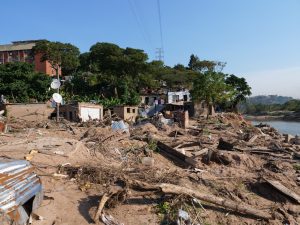
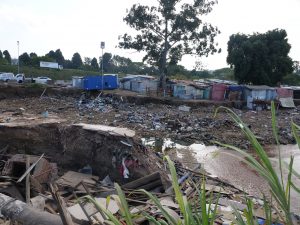
At Mega City Village and Quarry Road Settlement, we saw countless homes washed away or entirely brought down by the rains. Textbooks, clothes, teddy-bears, and other personal belongings covered in mud and debris served as a reminder of the number of lives that had been disrupted by the devastation. 

“My house was right here next to the river and I was a well-known businessman. But because of the floods, I no longer have a place to stay and my business is gone. Life is tough now. So far government has assisted with providing temporary accommodation but it’s overcrowded there… even most of the pit toilets that we built were swept away by the floods. We are asking government to move us away from this flood-prone area, because we don’t feel safe,” said Samkelo* from Mega Village Informal Settlement.
Infrastructure 

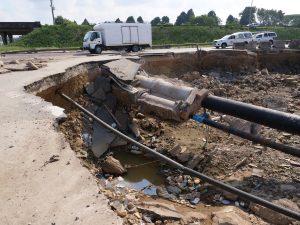
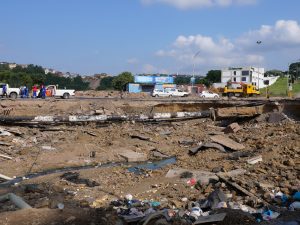
The rain and flooding caused major damage to roads and bridges that had still not been repaired during our visit. 

Watch Danny, a resident from Tongaat, explain how he feels the failure to maintain stormwater drainage infrastructure contributed to the damage of this road.
Despite all the devastating floods, there were also beautiful displays of communities helping neighbours with water and housing, showing respect and value for each other’s rights to safety, dignity and sanitation. The government must now show the same respect for the people they serve, protect people’s rights and provide them with the assistance they need to rebuild their lives. 

*Names changed to protect identity

Read AISA’s full statement calling on the government to be transparent, accountable and effective in its response to the Kwa-Zulu Natal floods here

NELSON MANDELA BAY ON THE CUSP OF A WATER CRISIS

By Genevieve Quintal, Amnesty International South Africa Media & Communications Officer

Amnesty International South Africa became increasingly aware of the fact that the Nelson Mandela Bay metro, in the Eastern Cape, was fast approaching “day zero”, in which the city would be left with little to no water. 

There were pockets of stories here and there in the media, but the metro’s water crisis was not getting nearly as much coverage and prominence as when Cape Town went through a similar situation in 2018. 

However, Nelson Mandela Bay’s water crisis was nothing new. The area has been in a drought since 2016. With the past five years being drier than the average, coupled with the growing population, the city has had to impose increasingly acute water restrictions since 2017.  

As we started preparing for our climate justice work, Nelson Mandela Bay became an area of interest and a possible case study for our work. We wanted to highlight how the increased occurrence of extreme weather events will impact people’s access to safe, sufficient and reliable water and the need to fast track the investment in, and implementation of, climate-friendly policies and infrastructure.

Whilst weather scientists cannot attribute individual weather events to climate change, they have said with certainty that all forms of extreme weather events have increased in frequency. 

The first step was to go to Nelson Mandela Bay and speak to the communities who are dealing with issues of water and who will face the consequences of “day zero”. 

Myself and AISA’s campaigner Sibusiso Khasa spent two days driving around Gqeberha, Kariega (Uitenhage), Bethelsdorp and Kwazakhele, speaking to people on the ground about what was happening and whether they were aware of “day zero”. 

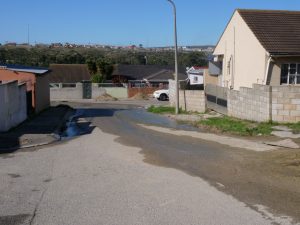
Despite a water crisis in the city, there are more than 3,000 water leaks.The leaks all around the metro were evident and when speaking to residents, this was the first issue they raised with us. The Nelson Mandela Bay metro in its 2020/21 annual report said the city lost 29% of water to leaks. 

Residents report these leaks to the municipality, but say that it can take weeks or even months for these to be fixed, or the leaks get fixed, but very soon another leak springs up. 
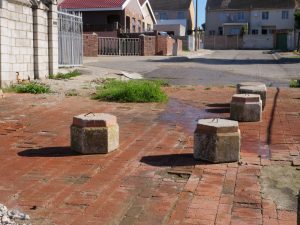
Another issue seemed to be a lack of communication around “day zero”.  Community members we spoke to told us that the only reason they were aware that there might be a water crisis was because they heard about it through the media, but very few actually knew what “day zero” meant or what would actually happen. The sentiment seemed to be that politicians were able to contact people when it was elections but not when there was a water crisis. 
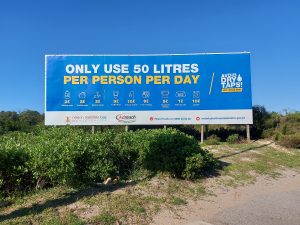
We continue to monitor what is happening in Nelson Mandela Bay and seek to  ensure that everyone is provided with their basic human rights, which includes the right to water. 

To read more about our field trip to Nelson Mandela Bay and our call to the government, please click here

The government is obliged to guarantee that sufficient resources are allocated and protected in any situation, to ensure that all human rights are upheld, and this includes the right to water.

WE WILL CONTINUE TO HOLD MINERAL RESOURCES ACCOUNTABLE

By Marike Keller, Researcher at Amnesty International South Africa

On 22 February, Amnesty International South Africa, in partnership with the Centre for Applied Legal Studies and the Sekhukhune Combined Mining-Affected Communities, released a joint research report on the impacts of mining on communities in the Sekhukhune region of the Limpopo province.

The research looked at three mining companies’ compliance with their Social and Labour Plans (SLPs) – legally binding mechanisms aimed at ensuring that companies offset the negative environmental and social impacts their operations have in the communities in which they operate. It further reveals the extent to which the failure to abide by SLP commitments, coupled with a lack of state oversight, leaves communities feeling disenfranchised and unable to fully realise their human rights, such as to education, access to healthcare, livelihoods and water.

From the start of 2021, the research team attempted on numerous occasions to get in touch with the National Department of Mineral Resources and Energy (DMRE). First to interview them for the research, then to request further information and documentation which was also followed by a right of reply (to give them an opportunity to respond to allegations and findings made before we published the report), and last when the research report was published to try to engage them on the findings and recommendations made. We did not receive a response to any of these attempts, nor their follow ups – this included a total of 18 follow up emails and 14 unanswered calls in 2021. 

We therefore decided to shine a public spotlight on the DMRE’s failure to engage and published an open letter to Gwede Mantashe, the Minister of Mineral Resources and Energy, highlighting some of our findings against the DMRE and recommendations made. 

We will not stop here. We will continue to follow up and apply pressure on the Minister and the DMRE to meet with us to address the failures of the department and to ensure that the rights of communities impacted by mining are upheld.

Interested in what we found? Read on to have a look at the open letter to Minister Gwede Mantashe. 

Wondering what more you can do? Follow us on Facebook and Twitter and share our calls to the DMRE demanding action and accountability. You can also find sample tweets on our story page that are easy to retweet with just the click of a button.

Our efforts to hold the DMRE accountable will continue, and we hope you will join us in our calls to fight for the rights of mining-affected communities, not only in the Sekhukhune region of South Africa, but country-wide.

Lack of legislation hindering the fight against hate crimes and hate speech

By Sibusiso Khasa,  Amnesty International South Africa Campaigner

The High Court in Pretoria recently sentenced a 57-year-old man who attacked a lesbian couple last year, killing one of them (28-year-old Bonang Precious Gaelae), to 25 years in prison for his crime. North Gauteng director of public prosecutions, Sibongile Mzinyathi, said that he hopes this will send a message that hate crimes will not  be tolerated. But according to the law in South Africa, is there such crime? No! 

If we had such a law, a person would be committing a hate crime against any person or group if the motivation for the crime is because of their race, sex (which includes intersex; or sexual orientation), nationality, and religion amongst other things

South Africa does not record hate crimes as a crime category, and does not provide crime statistics in this regard. But this brief by the Hate Crimes Working Group (HCWG) – which is currently chaired by Amnesty International South Africa, can give you an idea of how prevalent the crime is. 

However, there is progress in making legislation that will cater for such crimes. In 2021, The Prevention and Combating of Hate Crimes and Hate Speech Bill was revived, after lobbying and advocacy by the HCWG. The current formulation of the bill was introduced to Parliament in 2018. Public comments were called for, and many organisations and individuals made submissions, including the HCWG, but there was little movement after that. In March 2022, the bill was tabled in Parliament and organisations, including the HCWG, made new written and oral submissions.

So, why is the bill important?  

It will:

Send a message to society: Having a specific, written law makes it clear that South Africa rejects hate and prejudice in our society, and that we protect diversity and equality. 

Help police to detect: A law explains exactly what a hate crime or hate speech is, so the police know how to investigate and charge.

Help prosecutors and courts: A law gives the court a sentencing guideline that recognises the seriousness of hate crime and hate speech, and the impact on victims.

Help us understand the problem: A law means data on hate crimes and hate speech will be collected by the South African Police Service and the National Prosecuting Authority. This will help us understand the nature and size of the problem so we can create solutions that work.

The HCWG continues with efforts to ensure that the bill is passed and signed into law.

Watch the oral submission the group made to Parliament’s Portfolio Committee on Justice and Correctional Services.

FREEDOM DAY: WOMEN AND GIRLS STILL NOT FREE FROM THE SHACKLES OF VIOLENCE

After 28 years of freedom, not everyone in South Africa is safe, especially women and girls who continue to face horrendous incidents of violence, Amnesty International South Africa said on Freedom Day.

Read our full statement here.


WORLD PRESS FREEDOM DAY MARKED, WITH NOTABLE THREATS AND HARASSMENT OF JOURNALISTS IN SA

South Africa is facing several threats to freedom of expression, Amnesty International South Africa, Campaign for Free Expression, Committee to Protect Journalists, Media Monitoring Africa, and the South African National Editors’ Forum said on World Press Freedom Day.

Read the full statement here. 

SOUTH AFRICA: GOVERNMENT MUST FOCUS ON QUALITY EDUCATION IF IT WANTS TO TACKLE YOUTH UNEMPLOYMENT

Government must focus on providing quality education in a safe environment, if it wants to decrease youth unemployment in South Africa, Amnesty International South Africa said on Youth Day.

Read our full statement here.

SOUTH AFRICA/CHINA: PUT HUMAN RIGHTS AT THE FOREFRONT OF BRICS LEADERS’ SUMMIT

BRICS nations must put human rights at the forefront of their discussions, said Amnesty International South Africa ahead of the BRICS Leaders’ Summit in Beijing starting 23 June.


Read our full statement here.

In the second quarter of 2022, Amnesty International South Africa carried out 50 interviews, on various topics such as the next phase of our interrupt gender-based violence campaign #InterruptBrokenPromises; the situation around migrants; the amended health regulations; the impact of the KZN floods on people’s human rights; Nelson Mandela Bay’s water crisis; youth day and education.

On 8 April 2022, Shenilla Mohamed spoke to eNCA about the situation in Diepsloot, Johannesburg, after violent attacks by anti-migrant vigilante groups which led to the killing of Zimbabwean national Elvis Nyathi.

Watch the interview here

On 19 April 2022, Amnesty International South Africa Researcher Marike Keller spok to SAFM about the launch of the third phase of our gender-based violence campaign #InterruptBrokenPromises. 

Listen to the interview here
On 27 April 2022, Shenilla Mohamed spoke to Mandy Weiner on Radio 702 on Freedom Day, highlighting that not everyone in South Africa is safe, especially women and girls who continue to face horrendous incidents of violence.

Listen to the interview here

On 29 April 2022, Marike Keller spoke to eNCA about the proposed amendment to health regulations relating to the surveillance and the control of notifiable medical conditions.

Watch the interview here

On 24 May 2022, Amnesty International South Africa Campaigner Sibusiso Khasa spoke to Newzroom Afrika following the organisation’s field visit to flood hit KwaZulu-Natal.

Watch the interview here

On 14 June 2022, Amnesty International South Africa Media and Communications Officer Genevieve Quintal spoke to Newzroom Afrika about the organisation’s field visit to the Nelson Mandela Bay metro, which is facing a severe water crisis.

Watch the interview here

On 16 June 2022, Shenilla Mohamed spoke to SABC TV News on Youth Day and the state of the country’s education system which is affecting youth unemployment.

Watch the interview here

On 23 June 2022, Shenilla Mohamed spoke to Newzroom Afrika about the release of the final part of the state capture report and civil society’s role in ensuring there is accountability.

Watch the interview here

Activist

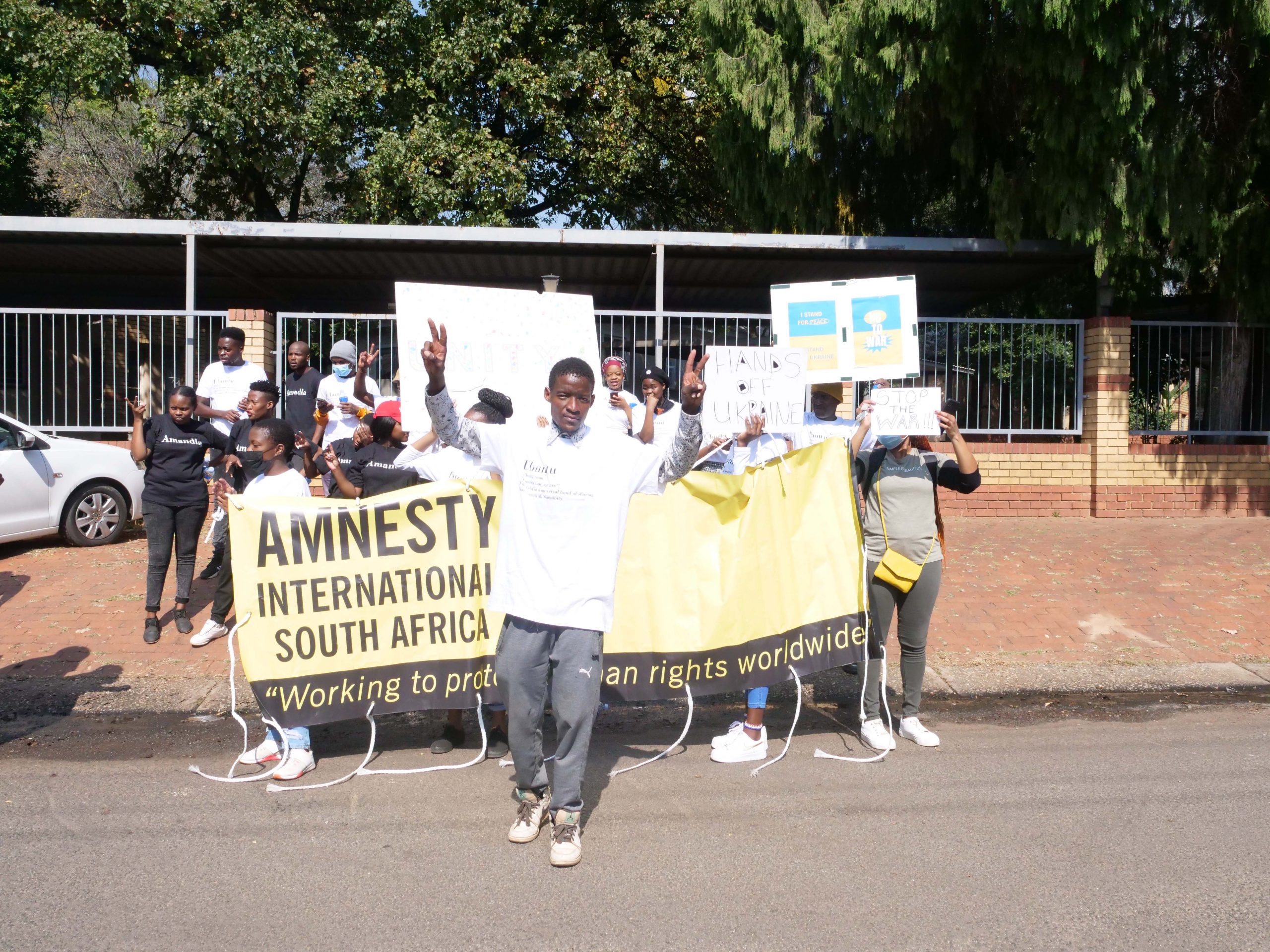
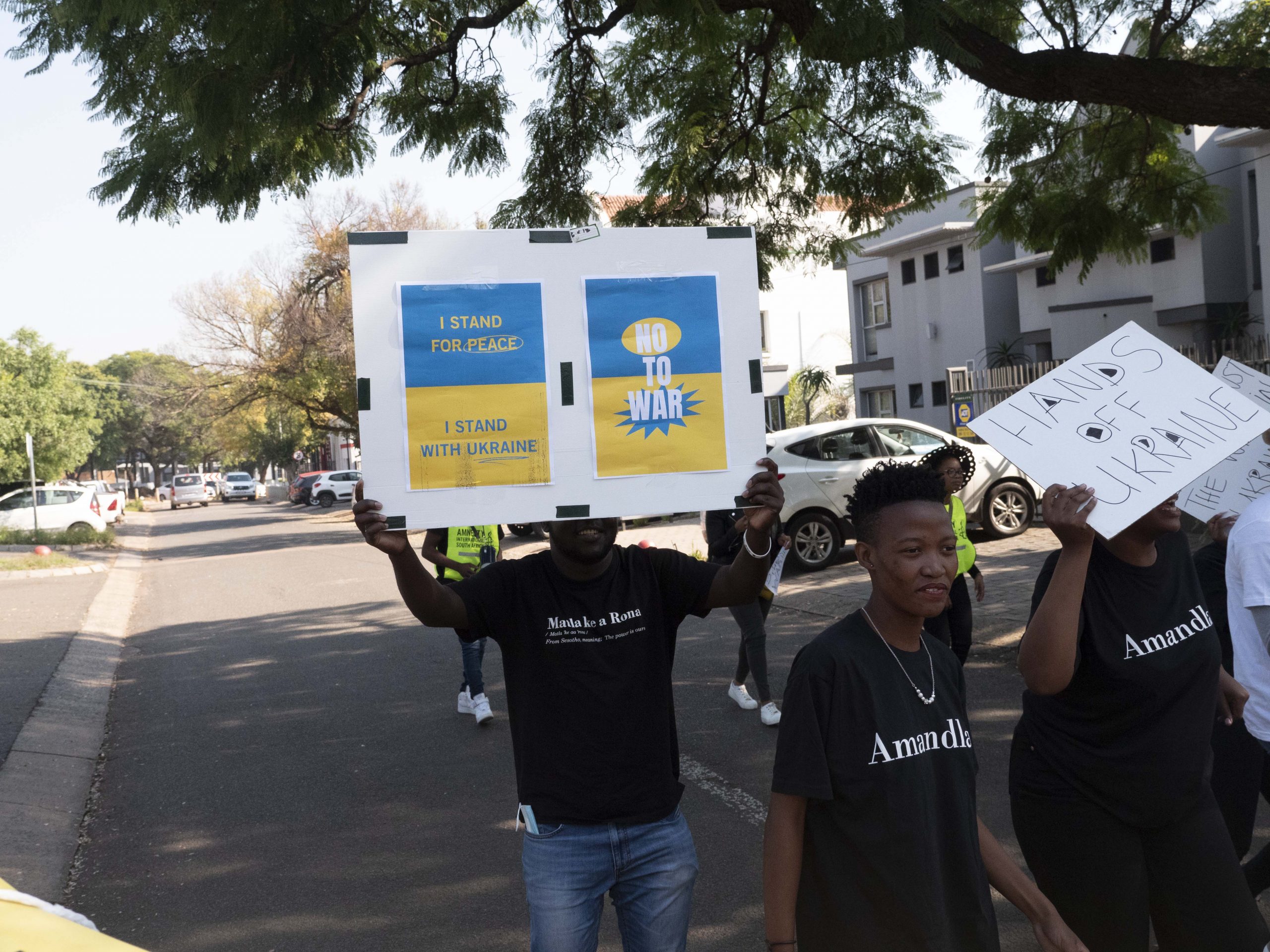
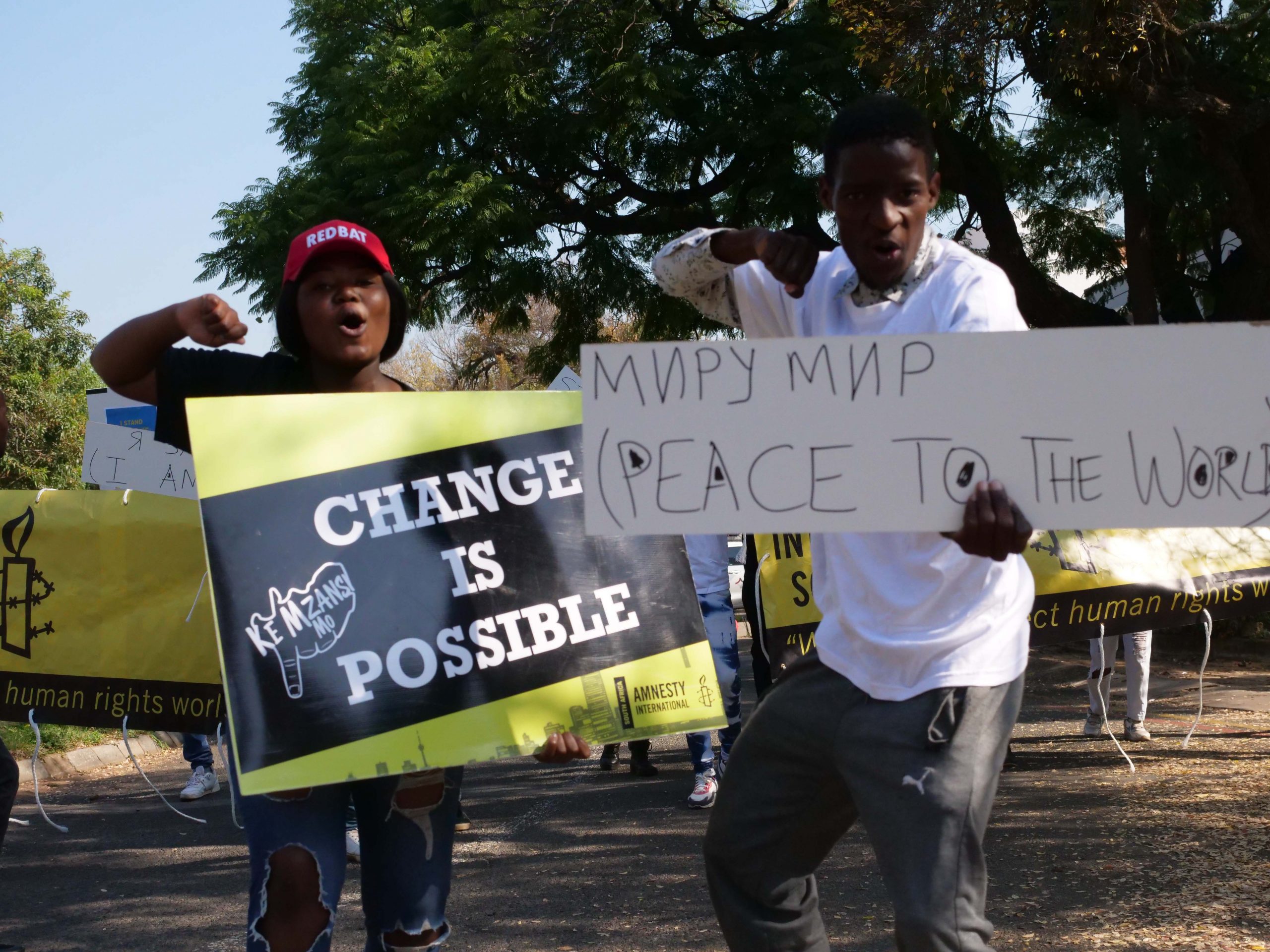
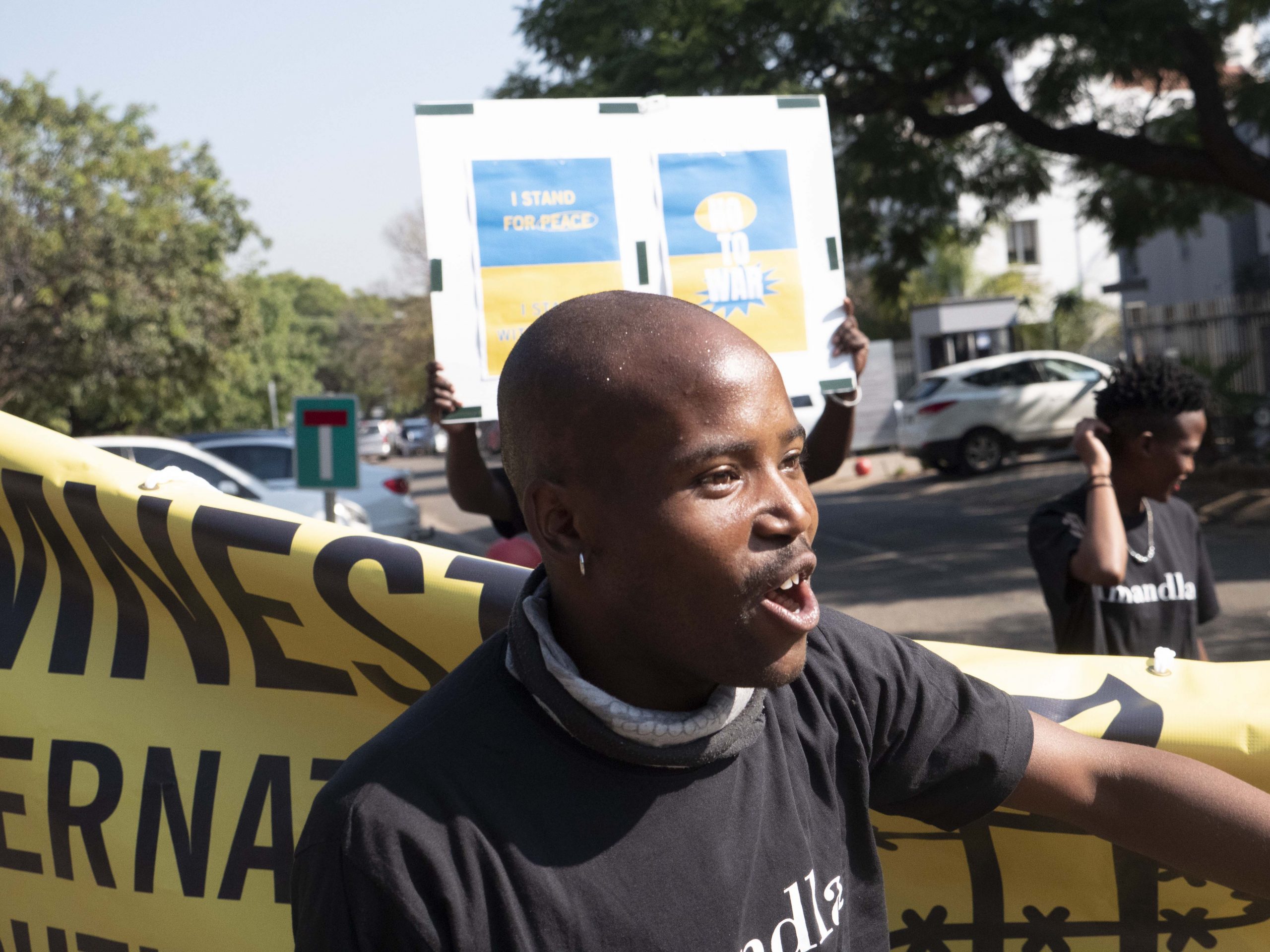
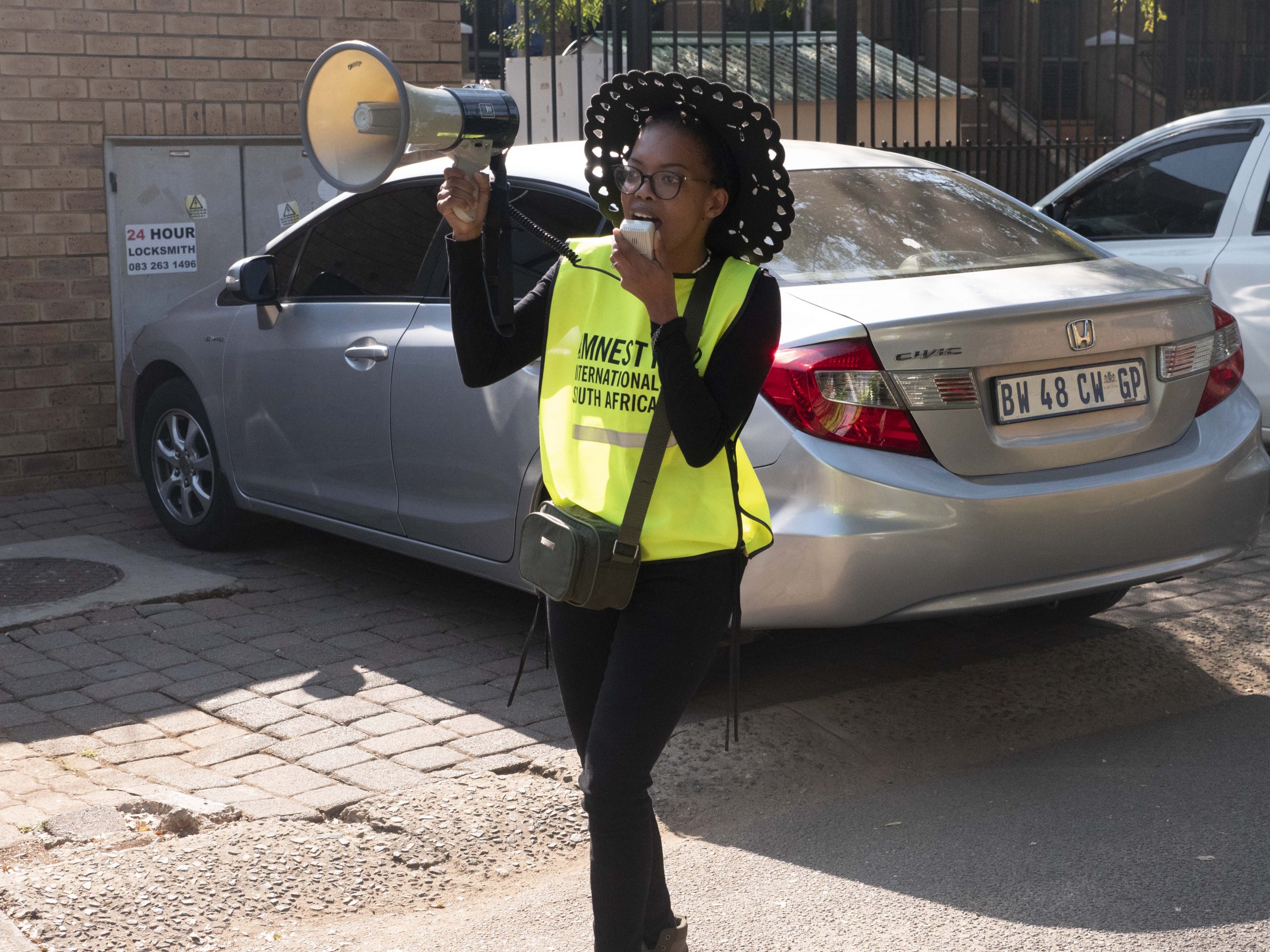
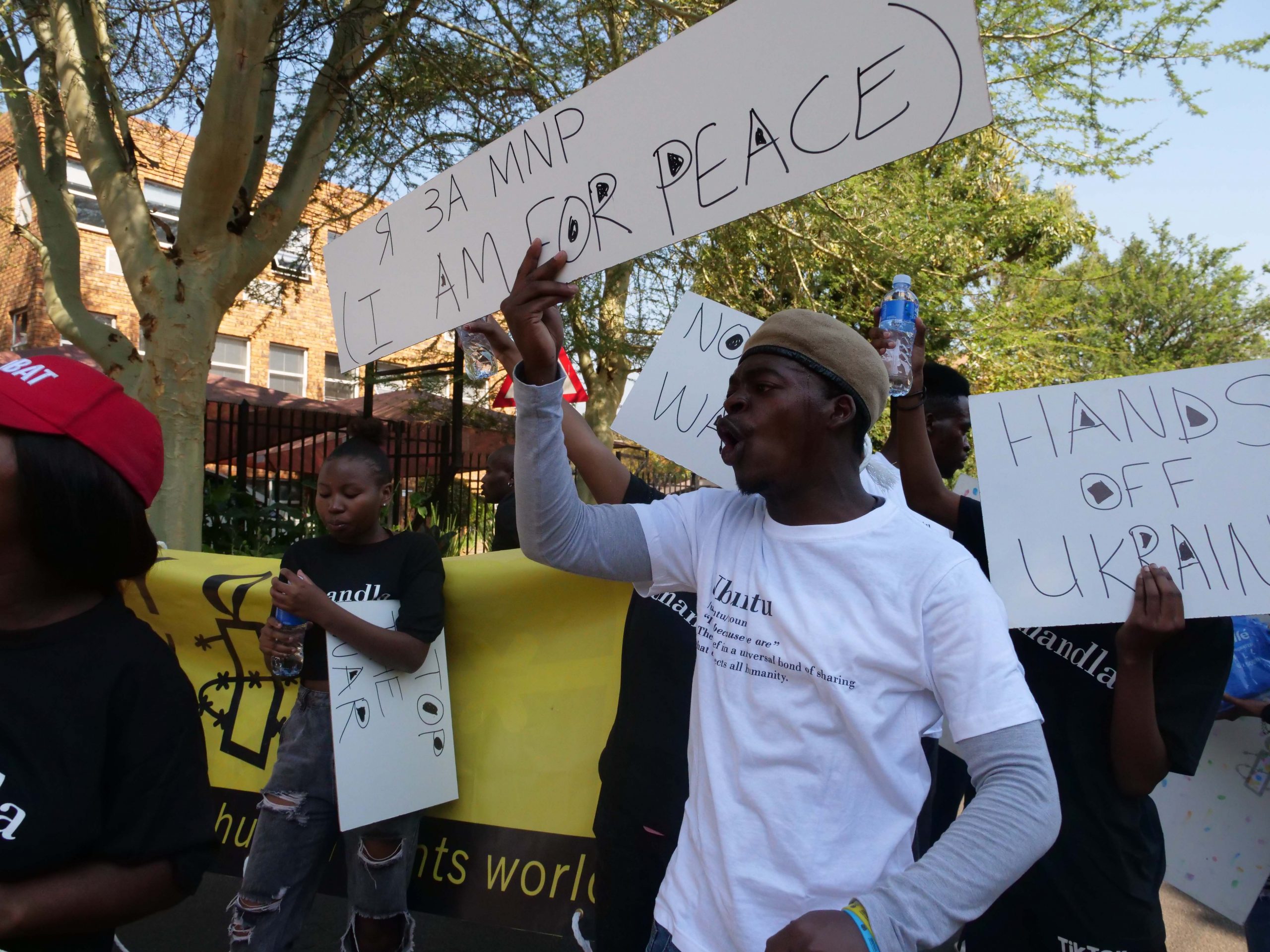
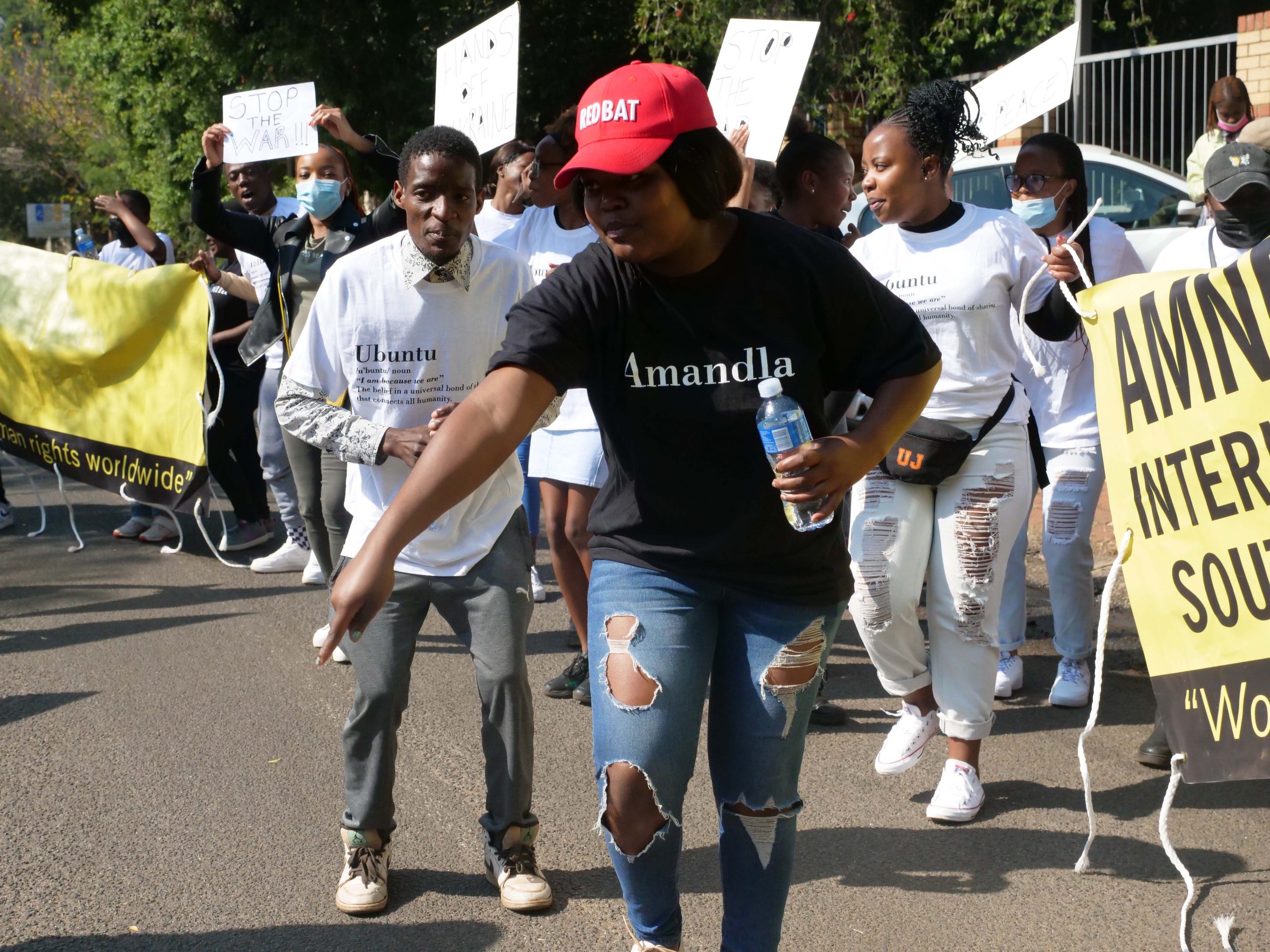
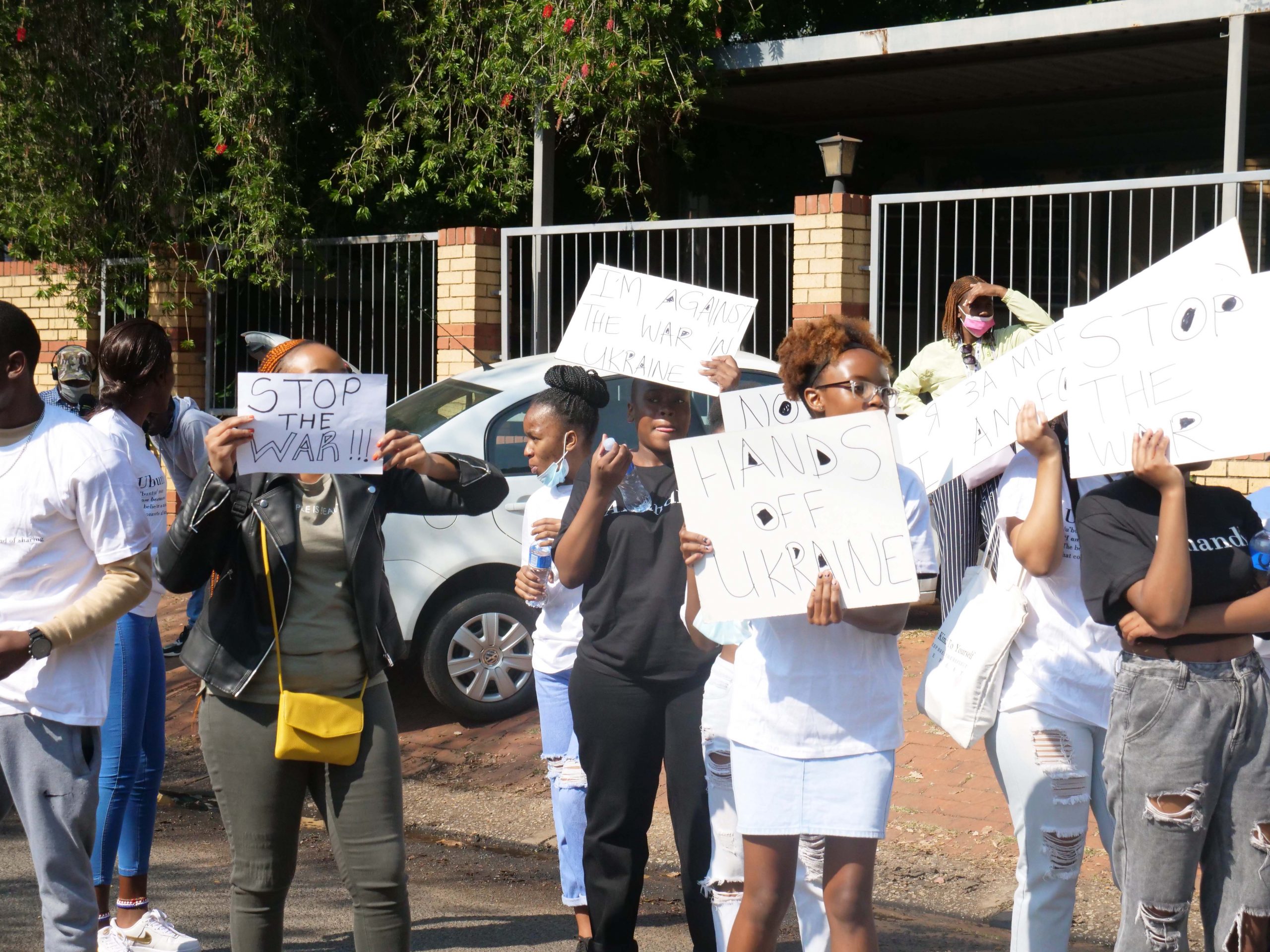
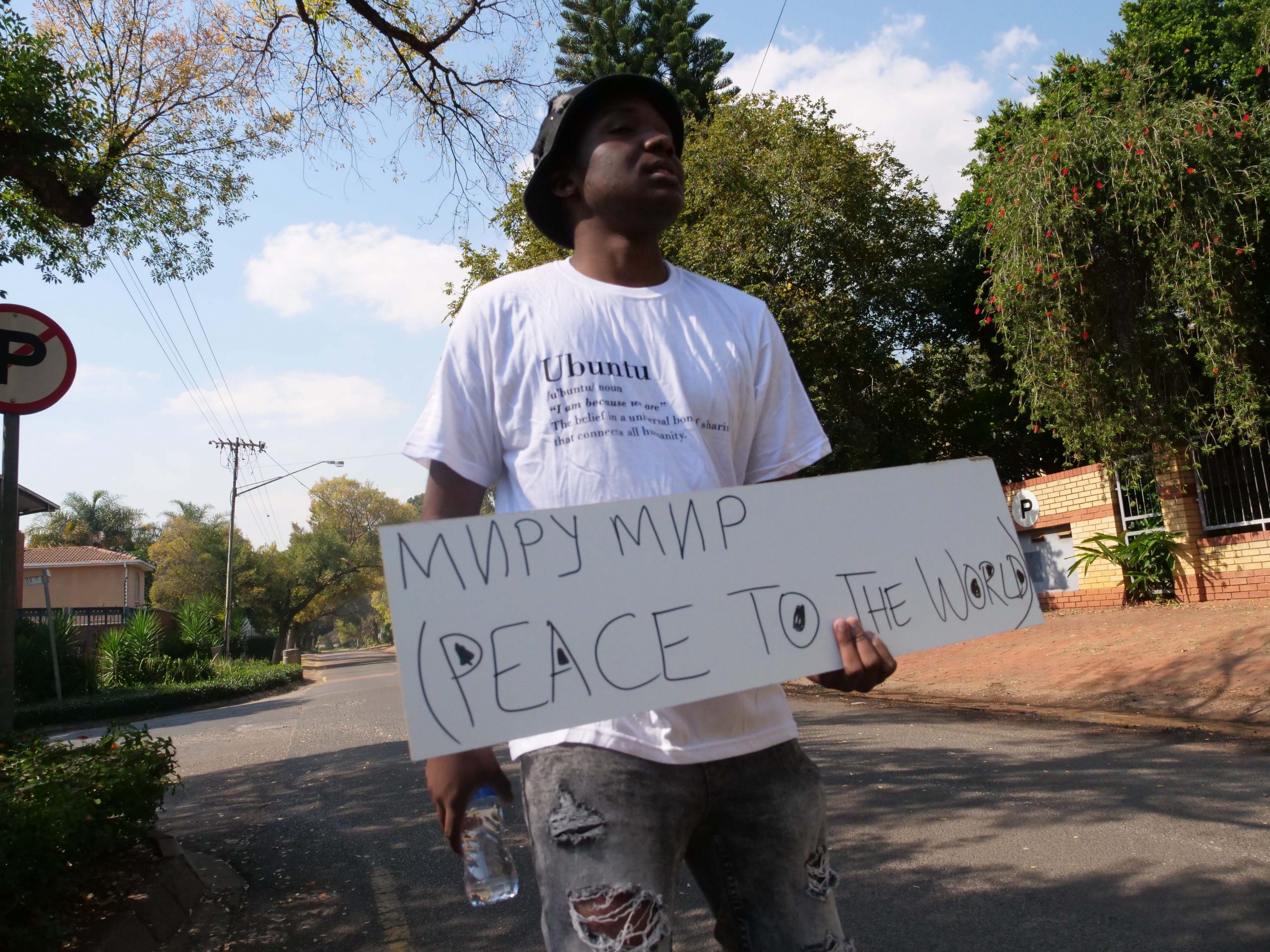
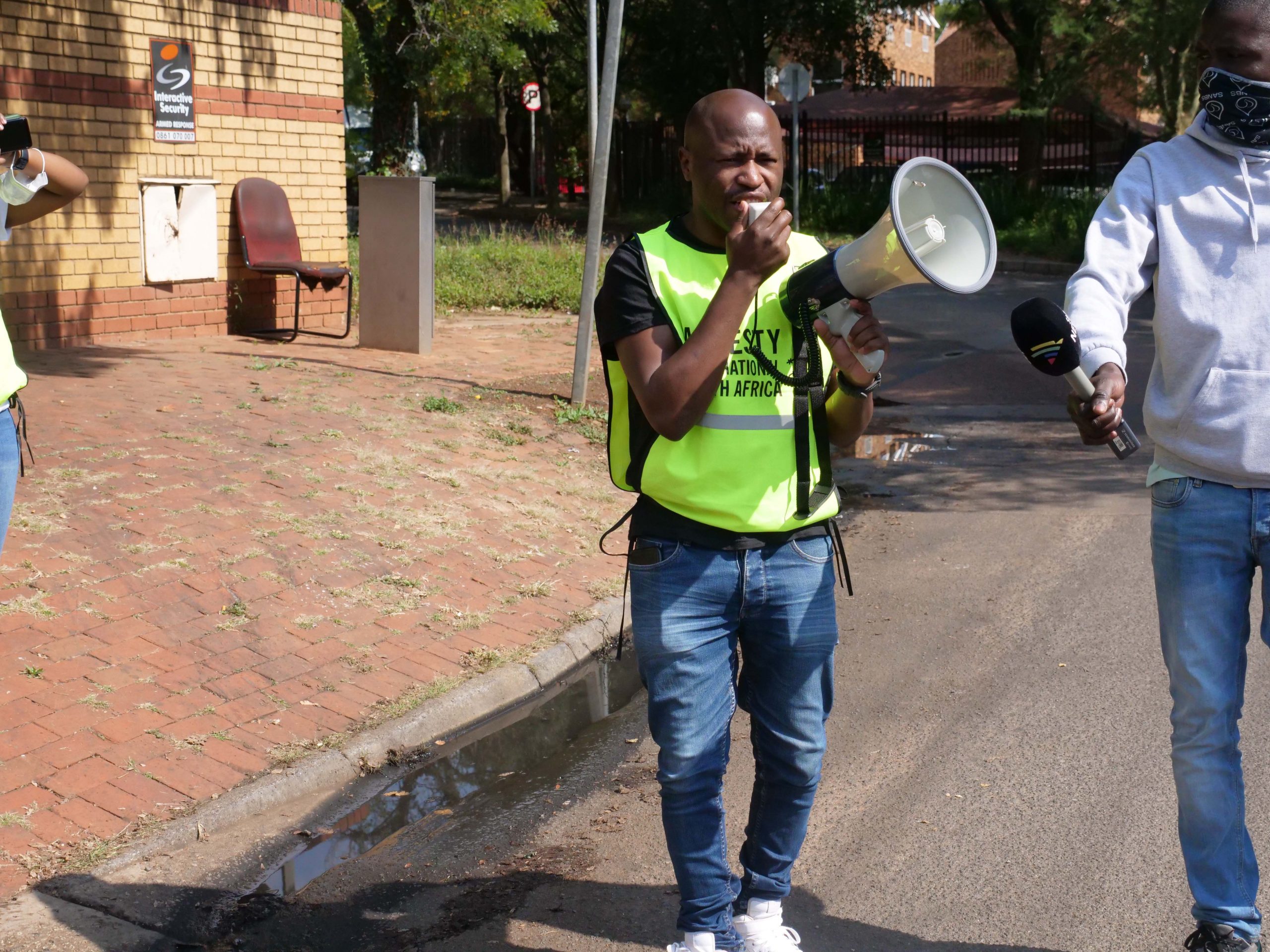
On 6 May, Amnesty International South Africa’s activists held a peaceful demonstration outside the Russian Embassy in Pretoria, in solidarity with the 15,000 people who have been arrested in Russia for protesting against the invasion of Ukraine.

Amnesty activists from more than 10 countries took part in organised demonstrations in their home nations in support of people who speak out against Russia’s invasion of Ukraine. Russian protestors’ rights to freedom of peaceful assembly and expression have been violated by Russian authorities, as many have been arrested and detained for speaking up against the invasion.

Hundreds of administrative and over 30 criminal cases have been initiated against peaceful protesters and dissenting voices under the newly introduced legislation which prohibits “disseminating false information” about, and “discrediting”, the Russian armed forces.

The demonstration outside the Embassy in May also aimed at calling for an end to the invasion of Ukraine.

Russia’s invasion of Ukraine is a flagrant violation of the United Nations Charter and an act of aggression that is a crime under international law.

Read more about what AISA activists had to say on the right to protest here.

YOUTH DAY PARADE

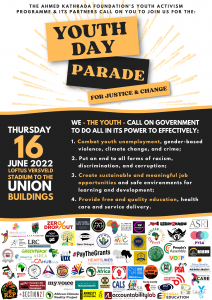
Amnesty International South Africa (AISA) collaborated with the Ahmed Kathrada Foundation (AKF) and other civil society organisations to commemorate Youth Day on 16 June, and call for the government of South Africa to address the issues facing young people today.

About 50 AISA activists joined in the demonstration held at the Union Buildings in Pretoria, to call for change. 

The AKF handed over a memorandum to the presidency, which highlighted the need for government to urgently and conclusively:

  • Combat youth unemployment, gender-based violence, climate change, and crime;

  • Put an end to all forms of racism, discrimination, and corruption;

  • Create sustainable and meaningful job opportunities and safe environments for learning and development;

  • Provide free and quality education, healthcare, and service delivery.

AISA used the opportunity to call on young people to take action on the state of education in South Africa as well as on the need for the State to do more in dealing with gender-based violence in the country. About 250 young people took action on the day and many others continue to do so online. 
AISA’s activism coordinator: organising Rejoyce Makhetha was interviewed at the parade by The Vuvuzela newspaper, which is produced by career-entry students of the Wits Journalism Department at Wits University.

Chapter News

AI Vaal – Ringa Ndoda

The AI Vaal Savannah City community chapter hosted a “Ringa Ndoda” men’s dialogue on the state of GBV in the community to raise awareness and provide human rights education. About 250 men pledged to be interrupters of GBV and signed the #InterruptBrokenPromises petition.

AI Vaal – Kasi to Kasi

The AI Vaal Evaton community chapter engaged community members on the fact that GBV is not a natural disaster and that it can be stopped because it is caused by human beings. The event answered the following questions: What is GBV? What are the causes of GBV? How to prevent GBV; where and how to report it; and the impact of GBV on women and children. With this Kasi to Kasi tour, the chapter reached 300 community members and debunked the following GBV myths: 

  • Ditaba tsa batho ba babedi hadi kenwe (No third person may enter when two people are fighting)❌

  • Monna ha alle ke nku (Men are sheeps, they don’t cry)❌

  • Mosadi okgale melwa ka thupa  (A woman is reprimanded with a lashing)❌

AI University of Fort Hare (UFH) – #InterruptBrokenPromises HRE

The AI UFH university chapter hosted a picnic where they engaged 30 students regarding gender-based violence. The picnic focused on human rights education where men were taught about the importance of respecting women and children’s rights to life, safety and security.

AI Wits – Livestream

In celebrating International Menstrual Hygiene day, the AI Wits university chapter hosted an Instagram live with a gynaecologist and a period activist aimed at highlighting the human right infringements that occur when girls are denied access to menstrual health products and services. The live stream also highlighted the reality of period poverty and how to combat and narrow the inequality gap that exist.
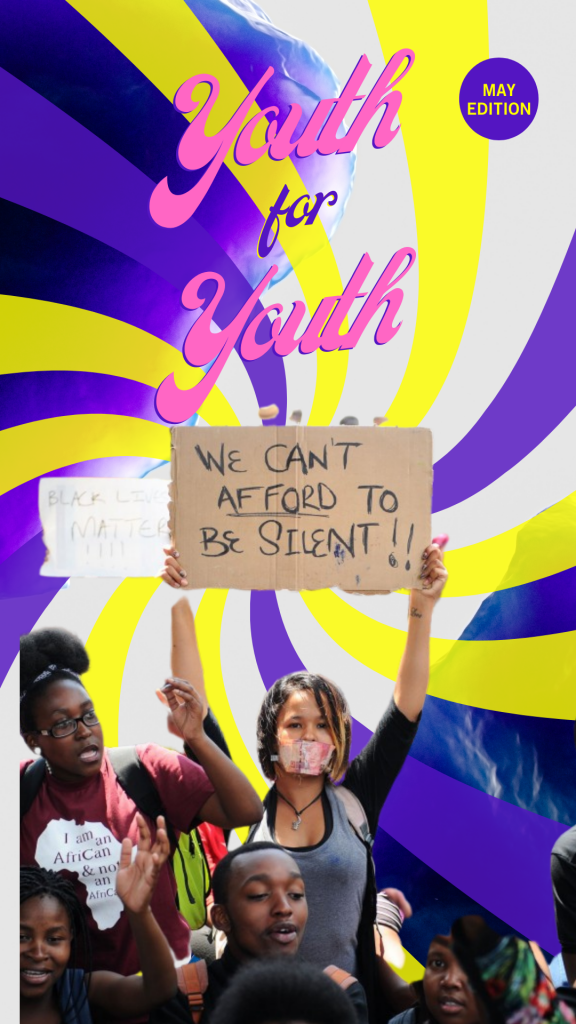
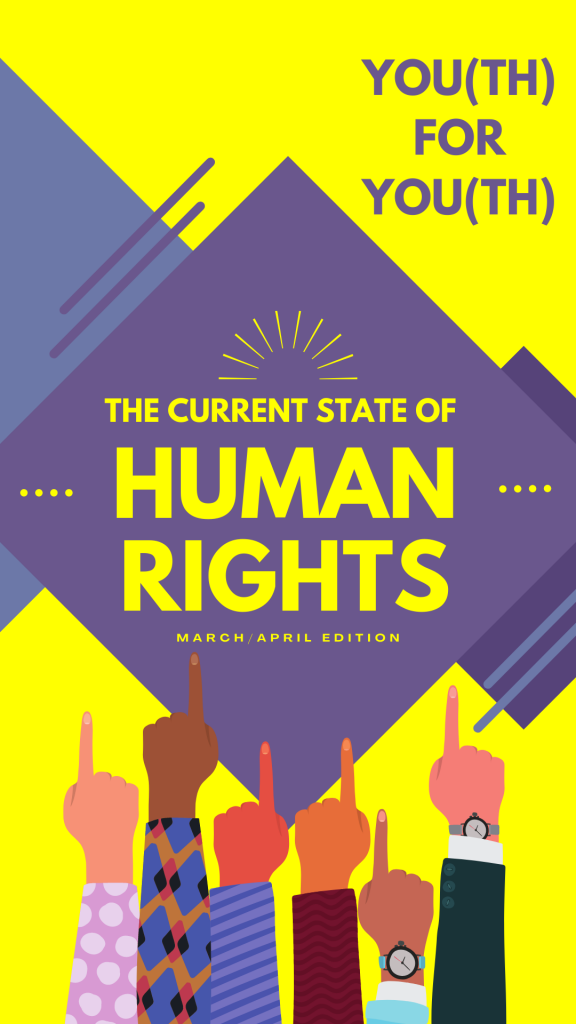
YOUTH NEWSLETTER

Amnesty International South Africa publishes a monthly youth newsletter, YOU(th) for YOU(th), where you can see more of what our youth activists are doing and get their views on human rights issues. 

You can find all our youth newsletters here.

You can click on the two most recent editions below. 

Matla! Ke a rona! (The power is ours!)

VOLUNTEERS NEEDED

Are you interested in gaining volunteer experience and spending a couple of hours at the Amnesty International South Africa office to assist with reviewing and verifying data? Let us know when you’d be available and what time suits you best at the following link.

SOUTH AFRICA: HUMAN RIGHTS GROUPS INTERVENE IN HISTORIC CLASS ACTION FOR LEAD POISONING LAUNCHED BY ZAMBIAN CHILDREN

Amnesty International and the Southern Africa Litigation Centre (SALC) applied to intervene in an unprecedented class action lawsuit in a case brought by a group of Zambian children and women against the mining giant Anglo American in South Africa.

The claimants are seeking compensation for the long-term impacts of lead mining in Kabwe.

The South Gauteng High Court in Johannesburg will soon have to decide whether to certify this unique class action denouncing the adverse human rights impacts of a South African company’s mining activities abroad. If the case proceeds, it will offer a unique opportunity for children and women from Kabwe to have a day in court.

Read about the class action here.


ETHIOPIA: CRIMES AGAINST HUMANITY IN WESTERN TIGRAY ZONE

Amhara regional security forces and civilian authorities in Ethiopia’s Western Tigray Zone have committed widespread abuses against Tigrayans since November 2020 that amount to war crimes and crimes against humanity, Amnesty International and Human Rights Watch said in a new report released in April. 

The report, ‘We Will Erase You From This Land’: Crimes Against Humanity and Ethnic Cleansing in Ethiopia’s Western Tigray Zone, documents how newly-appointed officials in Western Tigray and security forces from the neighbouring Amhara region, with the acquiescence and possible participation of Ethiopian federal forces, systematically expelled several hundred thousand Tigrayan civilians from their homes using threats, unlawful killings, sexual violence, mass arbitrary detention, pillage, forcible transfer, and the denial of humanitarian assistance.

Read about the report here.


ZIMBABWE: AUTHORITIES MUST DO MORE TO STOP CULTURE OF ABDUCTIONS AND KILLINGS

Moreblessing Ali was out with her friend in Beatrice on 24 May 2022 when she was allegedly taken by an identified man following an argument. She was missing for three weeks before being found murdered and her body mutilated on 11 June.

Cases of abductions where perpetrators are never held to account are common in Zimbabwe

“Authorities must not leave any stone unturned in the investigation of this case and ensure that suspected perpetrators are held accountable,” Lucia Masuka, Executive Director of Amnesty International Zimbabwe said.

Read the full response here.

ANGOLA: AUTHORITIES REPRESS CIVIL SOCIETY ORGANISATIONS AHEAD OF ELECTION

The Angolan authorities are tightening their grip on the rights to freedom of peaceful assembly and association by preventing civil society meetings from taking place ahead of the general election in August.

On 21 May, Angolan police prevented two NGOs — Omunga, and Associação para Desenvolvimento da Cultura e Direitos Humanos (ADCDH) — from holding a conference on peace building. 

The police blocked the entrance to Hotel Maiombe in Cabinda to prevent attendees from entering, saying they were following orders from their superiors.

“The harassment and intimidation of activists and repression of civil society organisations, who are merely exercising their rights and trying to hold a conference, is a worrying development for human rights in Angola — especially ahead of the August election,” said Deprose Muchena, Amnesty International’s Director for East and Southern Africa.

Read the full response here.

UKRAINE: RUSSIAN FORCES MUST FACE JUSTICE FOR WAR CRIMES IN KYIV OBLAST – NEW INVESTIGATION

Russian forces must face justice for a series of war crimes committed in the region northwest of Kyiv, Amnesty International said in a new briefing following an extensive on-the-ground investigation.

The briefing, ‘He’s Not Coming Back’: War Crimes in Northwest Areas of Kyiv Oblast, is based on dozens of interviews and extensive review of material evidence. Amnesty International documented unlawful air strikes on Borodyanka, and extrajudicial executions in other towns and villages including Bucha, Andriivka, Zdvyzhivka and Vorzel.

An Amnesty International delegation, led by the organisation’s Secretary General, visited the region in May 2022, and spoke with survivors and families of victims, and met with senior Ukrainian officials.

“It is vital that all those responsible, including up the chain of command, are brought to justice.”

Read the full statement and report here.

QATAR: SECURITY GUARDS SUBJECTED TO FORCED LABOUR

Security guards in Qatar are working in conditions which amount to forced labour, including on projects linked to the 2022 FIFA World Cup, Amnesty International has found.

In a new report, They think that we’re machines, the organisation documented the experiences of 34 current or former employees of eight private security companies in Qatar.    

The security guards, all migrant workers, described routinely working 12 hours a day, seven days a week – often for months or even years on end without a day off. Most said their employers refused to respect the weekly rest day which is required by Qatari law, and workers who took their day off anyway faced being punished with arbitrary wage deductions.

Read the full statement and report here

MYANMAR: MILITARY ONSLAUGHT IN EASTERN STATES AMOUNTS TO COLLECTIVE PUNISHMENT

Myanmar’s military has been systematically committing widespread atrocities in recent months, including unlawfully killing, arbitrarily detaining and forcibly displacing civilians in two eastern states, Amnesty International said today in a new report.

The report, “Bullets rained from the sky”: War crimes and displacement in eastern Myanmar, found that Myanmar’s military has subjected Karen and Karenni civilians to collective punishment via widespread aerial and ground attacks, arbitrary detentions that often result in torture or extrajudicial executions, and the systematic looting and burning of villages.

The violence in Kayin and Kayah States reignited in the wake of last year’s military coup and escalated from December 2021 to March 2022, killing hundreds of civilians and displacing more than 150,000 people.

Alarm bells should be ringing: the ongoing killing, looting and burning bear all the hallmarks of the military’s signature tactic of collective punishment, which it has repeatedly used against ethnic minorities across the country.

Read the full statement and report here

ISRAEL/OPT: INCREASE IN UNLAWFUL KILLINGS AND OTHER CRIMES HIGHLIGHTS URGENT NEED TO END ISRAEL’S APARTHEID AGAINST PALESTINIANS

Israeli authorities must end unlawful killings, willful injury, arbitrary arrests, torture and other ill-treatment, persecution and collective punishment against Palestinians, including many children, Amnesty International said in a public statement published today.

In the latest incident, Palestinian journalist Shirin Abu Akleh was shot in the head on 11 May while covering an Israeli military raid in the city of Jenin, in the northern occupied West Bank. Palestinians have been killed or injured as a result of the Israeli forces’ use of excessive force when policing protests or carrying out search and arrest raids. Some Palestinians appear to have been killed in acts that amount to extrajudicial executions, which constitute a crime under international law.

The killing of veteran journalist Shirin Abu Akleh is a bloody reminder of the deadly system in which Israel locks Palestinians. Israel is killing Palestinians left and right with impunity. How many more need to be killed before the international community acts to hold Israel accountable for the continuing crimes against humanity? said Saleh Higazi, Amnesty International’s Deputy Director for the Middle East and North Africa.

Read the full statement here

DEMOLISH APARTHEID NOT PALESTINIAN HOMES

Take action against demolitions and forced evictions now by writing to Israeli Prime Minister Naftali Bennett.

Call on him to immediately cancel all orders for forced evictions and home demolitions against Palestinians in Israel/OPT and to end the forced displacement of Palestinians.

USA: SUPREME COURT DECISION TO OVERTURN ROE V. WADE MARKS A GRIM MILESTONE IN THE HISTORY OF THE UNITED STATES

Supreme Court decision to overturn Roe v. Wade, Tarah Demant, interim national director for programs, advocacy and government affairs at Amnesty International USA, said:

“Today marks a grim milestone in the history of the United States as the Supreme Court has overturned Roe v. Wade and stripped Americans of the right to an abortion. Millions of people who can become pregnant in the United States now face a future where they will not be able to make deeply personal choices that affect their bodies, their future, and the well-being of their families.

Read the full response here

BECOME A VOTING MEMBER TODAY AND HELP STEER AMNESTY INTERNATIONAL SOUTH AFRICA’S FUTURE.

Ready to stand up and defend justice, freedom and equality for all? Believe in people power? Eager to use your passion for human rights to help shape our movement?

Our members make change possible. They’re the people we call on whenever and wherever human rights are under attack. Their actions, big and small, put pressure on governments, institutions and decision-makers to do the right thing.

JOIN THE AMNESTY MOVEMENT

HELP US BRING LIGHT TO INJUSTICES AND PROTECT HUMAN RIGHTS TODAY.