The promise of dignity and equality for all remains unfulfilled for millions of people, Amnesty International South Africa said on Freedom Day, the day the country commemorates 32 years since the end of apartheid.
“While the nation celebrates the end of racial oppression, successive governments have failed to deliver on the constitutional rights to have access to adequate housing, water, sanitation and other human rights and basic services,” Amnesty International South Africa Executive Director Shenilla Mohamed said.
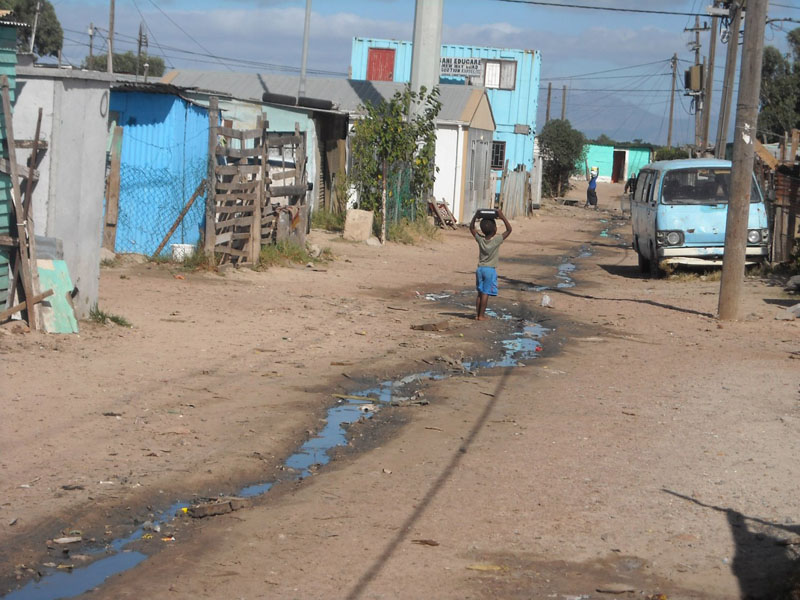
“Today, more than five million people live in informal settlements that are routinely flooded, neglected and forgotten, trapped in cycles of hardship that undermine the very freedoms won in 1994. Informal settlements and underserved areas stand as a stark reminder of the racial injustice and spatial segregation inherited from colonial and apartheid rule. Yet this legacy does not excuse the ongoing crisis,” she said.
Last year, Amnesty International South Africa released its report Flooded and Forgotten: Informal Settlements and the Right to Housing in South Africa, which showed how government is putting the well-being and in many cases the lives of the more than five million people living in South Africa’s informal settlements at risk by failing to uphold the right to have access to quality housing and essential services.
People live in flood-prone floodplains and low-lying areas not by choice, but because of the chronic shortage of affordable, well-located formal housing. Seasonal flooding now worsened by human-induced climate change destroys homes, belongings and livelihoods, while large-scale disasters like the 2022 KwaZulu-Natal floods (which killed 435 people and affected over 128,000) expose the patchy and inadequate nature of disaster response and recovery. Some residents displaced years ago remain in temporary accommodation in poor conditions, and many have faced further tragedy when relocated to equally unsafe sites.
“Informal settlements and temporary relocation areas in South Africa starkly reflect the racial injustice of colonialism and apartheid. Yet, we must also recognise the ongoing housing crisis and the failure of successive governments to uphold the right to have access to adequate housing, among other human rights and basic services,” Shenilla Mohamed said.
“The government is failing millions of people, especially at a time when economic hardships and poverty are rife. The reality is that millions of South Africans are deprived of these rights due to government neglect, under-resourced municipalities, corruption, mismanagement and poor urban governance.”
This failure is not new. As South Africa heads into a local government election later this year, service delivery once again becomes a central promise, as it is in every election, yet it has repeatedly been reduced to pre-election politicking rather than human rights that the government has an obligation to deliver on.
More than three million people living in South Africa still lack access to safe, sufficient and reliable water, while millions more have no basic sanitation. These realities fall hardest on Black women and impoverished communities. South Africa has strong laws and policies and is bound by international human rights standards, but implementation falls tragically short.
“Those who have been elected to serve everyone living in South Africa, must stop the politicking and deliver on human rights obligations, this call remains urgent,” Shenilla Mohamed said.
“Service delivery is the foundation for the full enjoyment of human rights by all who live in South Africa and the state has a constitutional obligation to take action to ensure access to these rights.”
On this Freedom Day, the government must move beyond rhetoric and finally deliver the dignity and equality promised in 1994.
Background
Freedom Day is a national day in South Africa and is celebrated annually on 27 April. It celebrates freedom and commemorates the first post-apartheid elections held on that day in 1994.
The elections were the first non-racial elections where everyone of voting age from any racial group were allowed to vote. Previously, under the apartheid regime, non-whites had only limited rights to vote.
For more information or to request an interview, please contact:
Genevieve Quintal, Media and Communications Officer, Amnesty International South Africa: +27 (0)64 890 9224; genevieve.quintal@amnesty.org.za